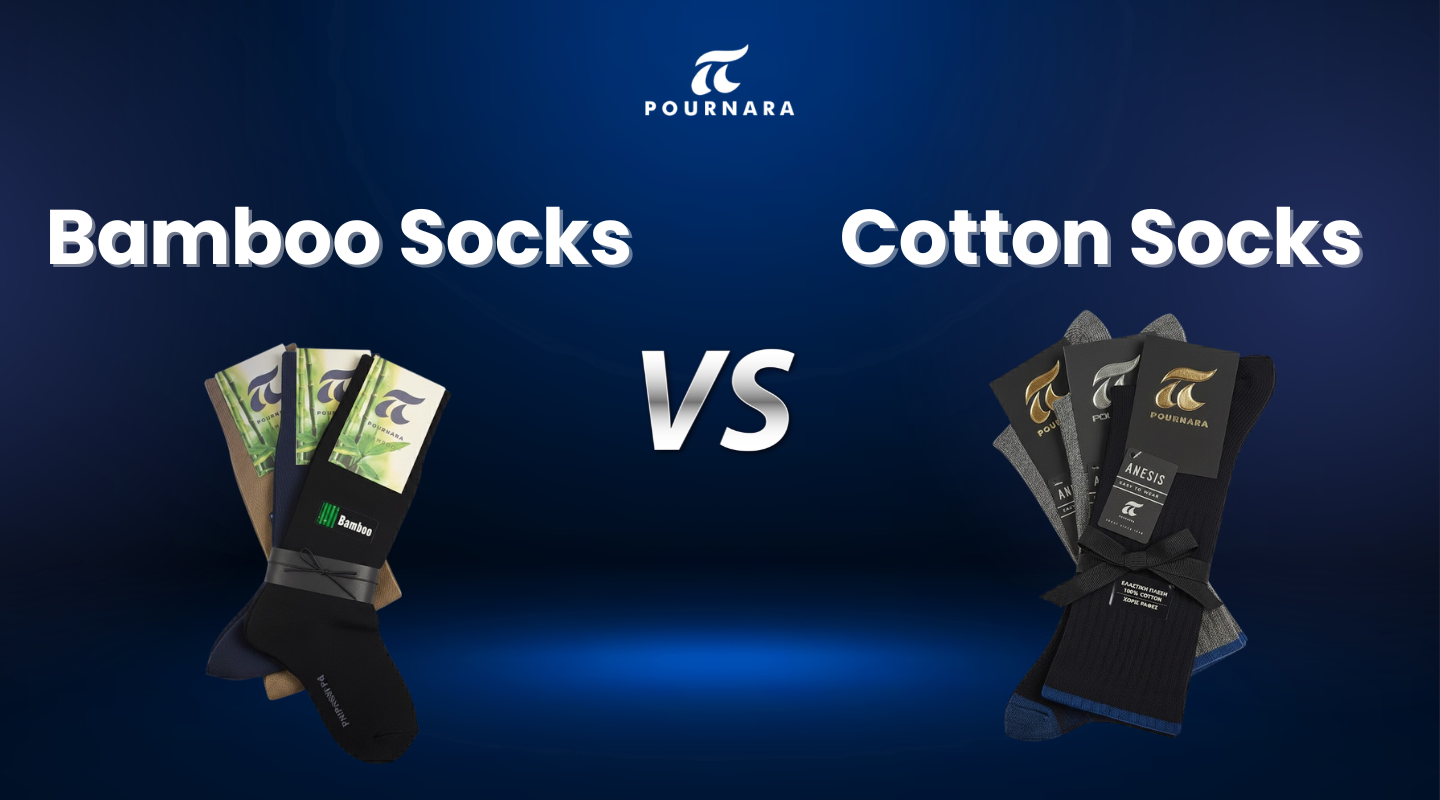
Socks might not be the most glamorous topic, but they play a crucial role in daily comfort. That moment when you’re getting dressed and your socks feel off damp, scratchy, or bunching awkwardly signals a problem worth solving.
Most people don’t give much thought to sock selection. They grab whatever’s available in the drawer. Usually cotton. It’s what previous generations bought, and it fills store shelves everywhere. But bamboo socks have been gaining traction in recent years, and the differences between these materials are more significant than many realize.
What makes one better than the other?
Bamboo socks often sound like an eco-trend novelty, but the reality differs from that perception considerably.
These socks begin as bamboo grass the same tall plant pandas consume. Manufacturers harvest the plants, pulp them down, then process them into fibers. The result is surprisingly silky material that resembles high-quality dress shirt fabric more than traditional sock material.
The fibers contain microscopic gaps invisible to the naked eye, but these gaps become important once feet start perspiring. Feet are essentially sweat factories, after all. There’s also a natural antibacterial compound called bamboo kun present in the plant. This compound doesn’t wash out during processing, meaning it remains active in the finished socks, continuously working against bacteria.
The “naturally antimicrobial” claim sounds like a marketing copy at first. However, it’s an actual measurable property of bamboo, not just packaging language.
Cotton socks need little introduction. They’re universally familiar.
These socks come from cotton plants, those white fluffy bolls and once spun into thread, they create soft, breathable, familiar fabric. Pure 100 percent cotton socks (without polyester blends) offer genuine comfort. They breathe well. They’re affordable. After fifty washes, they still function fine.
Cotton has dominated the market partly because it works and partly due to ubiquity. Any store carries cotton socks in multiple colors and styles. Cotton adapts to everything: gym socks, dress socks, cotton compression socks for circulation support.
That said, cotton socks have specific weaknesses that become apparent only after trying alternatives.
Feet perspire far more than most people realize. They contain more sweat glands per square inch than nearly any other body part. If socks can’t manage moisture effectively, other features become irrelevant.
Bamboo significantly outperforms cotton in this category.
Those micro-gaps mentioned earlier actively pull sweat away from skin and facilitate rapid evaporation. Various sources report bamboo absorbs three to four times more moisture than cotton. The precise multiplier matters less than the outcome: feet stay substantially drier.
Cotton socks absorb sweat adequately but then retain it. Many people notice their cotton socks feel vaguely damp by day’s end. That’s cotton’s inherent behavior, absorbing moisture without releasing it efficiently. During summer months or periods of activity, this becomes genuinely uncomfortable. Feet turn clammy, socks adhere to skin.
In humid climates especially, this moisture difference becomes the first noticeable factor when switching to bamboo. Feet feel lighter, less swampy. It’s difficult to articulate until experienced firsthand, but once that difference registers, returning to damp cotton feels suboptimal.
Foot odor remains an uncomfortable topic, but it’s a legitimate concern. Approximately 16% of adults experience it regularly. The odor doesn’t originate from sweat itself but from bacteria thriving in warm, moist environments. Feet essentially create an ideal bacterial habitat.
Bamboo’s natural antimicrobial properties provide real advantages here. The bamboo kun compound actively inhibits bacterial multiplication within the fabric. This means socks maintain freshness longer, even after full-day wear. For frequent travelers or anyone seeking to reduce laundry frequency, this represents a practical benefit.
Cotton lacks inherent defensive properties. Bacteria colonize the fibers and multiply freely. When socks remain damp (which cotton tends to facilitate), the situation worsens. Regular washing manages the issue, but cotton doesn’t actively combat the problem.
This odor resistance often becomes the second noticeable difference. Bamboo socks can be worn for extended periods while remaining fresh. Cotton socks cannot match this performance.
Both materials qualify as soft, but they feel distinctly different.
Cotton offers familiar, cozy softness that most people grew up experiencing. High-quality varieties of Egyptian cotton, mercerized cotton feel particularly pleasant. They deliver expected sock comfort. No real complaints there.
Bamboo feels noticeably smoother. Almost silkier. The fibers possess rounder, more uniform structures than cotton, creating less friction against skin. It’s not merely “soft” but approaches a slippery-smooth texture. Comparisons to silk or cashmere sound excessive until directly experienced.
For people spending long hours on their feet or those with sensitive, easily-irritated skin, this distinction matters considerably. Reduced friction translates to reduced irritation.
Additionally, cotton loses softness over time. Repeated washing gradually stiffens the fabric, roughening the texture. Bamboo maintains its smooth character far longer. Some bamboo socks retain a near-new feel even after 30+ wash cycles.
Cotton demonstrates serious toughness. Cotton socks withstand high-heat washing, high-heat drying, daily wear, and outdoor work without failing. For people who are rough on socks or need them for hiking and physical labor, cotton delivers reliable durability.
Even specialty varieties like cotton compression socks maintain their elasticity well over time, which proves crucial for anyone relying on them for leg support or improved circulation.
Bamboo offers durability too, though differently. It resists pilling better than cotton (those small fabric balls that develop), and holds its shape more consistently. However, bamboo benefits from gentler care. Cool or warm water washing, avoiding high-heat drying, these practices extend lifespan significantly. Aggressive treatment shortens it.
With appropriate care, bamboo can actually outlast cotton. The fibers break down more slowly. The challenge lies in getting people to follow care instructions consistently.
Many customers find themselves checking washing instructions for the first time in years after investing in quality bamboo socks.
Bamboo grows at remarkable speeds. Some species shoot up several feet within 24 hours. Pesticides aren’t required. Water needs are minimal. The plant regrows from existing roots, eliminating replanting needs. From a resource perspective, bamboo demonstrates exceptional efficiency.
Cotton demands substantial water. Conventional cotton farming consumes massive water quantities, plus heavy pesticides and fertilizers that impact soil health and water quality. Organic cotton improves the situation somewhat, though water requirements remain high.
Worth noting: not all bamboo fabric production is equally sustainable. Some processing methods employ harsh chemicals to break plant material into usable fiber. For environmentally-conscious consumers, researching specific brand production methods makes sense. Some companies handle this far better than others.
Environmental considerations may not be everyone’s primary purchasing factor, but the sustainability advantage of bamboo represents a genuine bonus.
Cotton socks cost less at purchase. They’re widely available, manufacturing processes are well-established, and decent 100 percent cotton socks can be found at reasonable prices.
Bamboo costs more upfront. Processing complexity increases costs, raw materials cost more to produce. Consumers pay a premium.
The interesting calculation emerges over time: if bamboo socks last longer and require less frequent replacement, that initial price gap narrows. It’s not simply about the sticker price, it’s about cost per wear calculated across months or years. Bamboo remains more expensive, just less dramatically so than initial comparison suggests.
The answer depends on priorities.
For maximum moisture control, superior odor resistance, and silky-smooth texture, bamboo emerges as the clear winner. It’s particularly well-suited for people with excessive foot perspiration, those in humid climates, or anyone wanting socks that maintain freshness longer between washes. Many customers who make the switch to bamboo for everyday wear report high satisfaction.
For those prioritizing raw durability, upfront affordability, and the reliable comfort of familiar materials, cotton remains an excellent choice. Whether needs include everyday cotton socks, athletic styles, or even cotton compression socks for medical purposes, cotton delivers consistent performance. Especially 100 percent cotton options or quality Egyptian cotton varieties. Cotton has earned its default status over decades of proven effectiveness.
At Pournara, we’ve been manufacturing socks for more than 75 years, exclusively using natural materials. Whether customers choose bamboo or cotton, construction quality matters as much as fiber selection. Our socks utilize 220-260 knitting needles significantly more than industry standard creating denser, longer-lasting products.
Pournara
We firmly believe that the internet should be available and accessible to anyone, and are committed to providing a website that is accessible to the widest possible audience, regardless of circumstance and ability.
To fulfill this, we aim to adhere as strictly as possible to the World Wide Web Consortium’s (W3C) Web Content Accessibility Guidelines 2.1 (WCAG 2.1) at the AA level. These guidelines explain how to make web content accessible to people with a wide array of disabilities. Complying with those guidelines helps us ensure that the website is accessible to all people: blind people, people with motor impairments, visual impairment, cognitive disabilities, and more.
This website utilizes various technologies that are meant to make it as accessible as possible at all times. We utilize an accessibility interface that allows persons with specific disabilities to adjust the website’s UI (user interface) and design it to their personal needs.
Additionally, the website utilizes an AI-based application that runs in the background and optimizes its accessibility level constantly. This application remediates the website’s HTML, adapts Its functionality and behavior for screen-readers used by the blind users, and for keyboard functions used by individuals with motor impairments.
If you’ve found a malfunction or have ideas for improvement, we’ll be happy to hear from you. You can reach out to the website’s operators by using the following email
Our website implements the ARIA attributes (Accessible Rich Internet Applications) technique, alongside various different behavioral changes, to ensure blind users visiting with screen-readers are able to read, comprehend, and enjoy the website’s functions. As soon as a user with a screen-reader enters your site, they immediately receive a prompt to enter the Screen-Reader Profile so they can browse and operate your site effectively. Here’s how our website covers some of the most important screen-reader requirements, alongside console screenshots of code examples:
Screen-reader optimization: we run a background process that learns the website’s components from top to bottom, to ensure ongoing compliance even when updating the website. In this process, we provide screen-readers with meaningful data using the ARIA set of attributes. For example, we provide accurate form labels; descriptions for actionable icons (social media icons, search icons, cart icons, etc.); validation guidance for form inputs; element roles such as buttons, menus, modal dialogues (popups), and others. Additionally, the background process scans all the website’s images and provides an accurate and meaningful image-object-recognition-based description as an ALT (alternate text) tag for images that are not described. It will also extract texts that are embedded within the image, using an OCR (optical character recognition) technology. To turn on screen-reader adjustments at any time, users need only to press the Alt+1 keyboard combination. Screen-reader users also get automatic announcements to turn the Screen-reader mode on as soon as they enter the website.
These adjustments are compatible with all popular screen readers, including JAWS and NVDA.
Keyboard navigation optimization: The background process also adjusts the website’s HTML, and adds various behaviors using JavaScript code to make the website operable by the keyboard. This includes the ability to navigate the website using the Tab and Shift+Tab keys, operate dropdowns with the arrow keys, close them with Esc, trigger buttons and links using the Enter key, navigate between radio and checkbox elements using the arrow keys, and fill them in with the Spacebar or Enter key.Additionally, keyboard users will find quick-navigation and content-skip menus, available at any time by clicking Alt+1, or as the first elements of the site while navigating with the keyboard. The background process also handles triggered popups by moving the keyboard focus towards them as soon as they appear, and not allow the focus drift outside it.
Users can also use shortcuts such as “M” (menus), “H” (headings), “F” (forms), “B” (buttons), and “G” (graphics) to jump to specific elements.
We aim to support the widest array of browsers and assistive technologies as possible, so our users can choose the best fitting tools for them, with as few limitations as possible. Therefore, we have worked very hard to be able to support all major systems that comprise over 95% of the user market share including Google Chrome, Mozilla Firefox, Apple Safari, Opera and Microsoft Edge, JAWS and NVDA (screen readers).
Despite our very best efforts to allow anybody to adjust the website to their needs. There may still be pages or sections that are not fully accessible, are in the process of becoming accessible, or are lacking an adequate technological solution to make them accessible. Still, we are continually improving our accessibility, adding, updating and improving its options and features, and developing and adopting new technologies. All this is meant to reach the optimal level of accessibility, following technological advancements. For any assistance, please reach out to