
Wool socks maintain trending status in 2026 through 4 specific performance advantages. Natural temperature regulation works across 40-degree fluctuations without synthetic treatments. Moisture management prevents dampness while absorbing 30% of fiber weight. Odor resistance eliminates 66% of bacteria without chemical additives. Sustainability appeals to eco-conscious consumers seeking biodegradable materials.
Scientific testing proves wool provides warmth 7 times more effective than cotton socks. This dramatic performance gap explains wool’s sustained popularity despite higher initial costs.
Merino wool fibers measure 17 to 19 microns in diameter compared to traditional wool’s 40 microns. This 50% reduction eliminates the scratchy sensation that prevented wool adoption in previous generations. The ultrafine fibers bend easily against skin, creating cashmere-like softness.
The crimped structure creates 30 crimps per inch along each fiber. These bends form thousands of air pockets trapping warmth while maintaining breathability. Quality wool socks leverage this natural insulation system perfected through thousands of years of evolution.
Wool fibers automatically adjust to activity levels through thermoregulation. During inactive periods, fibers contract slightly, tightening air pockets to maximize heat retention. When activity increases, fibers relax allowing excess warmth to escape.
This biological response prevents the overheating common with synthetic thermal socks. The same pair maintains comfort in 20-degree mornings and 60-degree afternoons without sock changes.
Natural antimicrobial properties stem from wool’s protein structure. The lanolin coating and fiber composition actively resist bacterial growth. This biological defense doesn’t wash away like chemical treatments in synthetic socks.
Bacteria thrive in moist environments. Cotton retains moisture against skin, creating ideal breeding conditions. Wool wicks moisture away from feet into fiber cores where it evaporates. This moisture management reduces bacterial populations by 66% compared to cotton socks.
| Season | Temperature Range | Wool Performance | Activity Suitability |
| Winter | Below 40°F | Maximum insulation | Outdoor activities, commuting |
| Spring | 40-60°F | Moderate warmth | Hiking, everyday wear |
| Summer | 60-80°F | Cooling effect | Business, light activity |
| Fall | 40-65°F | Temperature balance | Transitional wear |
Year-round versatility explains wool’s dominance across sock categories. The natural fiber adapts to environmental conditions rather than requiring season-specific purchases.
Summer wool socks sound counterintuitive until understanding thermoregulation. The fiber keeps feet 2 to 3 degrees cooler than cotton by wicking perspiration and allowing air circulation.
Business environments benefit from wool’s 3 professional advantages. Odor resistance maintains freshness during 10-plus hour workdays without midday sock changes. Temperature control handles varied office climates from cold conference rooms to warm cubicles. Professional appearance maintains shape and color through 100-plus wash cycles.
Merino wool blends containing 60% to 82% wool with nylon and lycra provide optimal performance. The synthetic addition increases durability while maintaining wool’s natural benefits. These blends withstand daily professional wear better than 100% wool options.
Environmental consciousness shapes 2026 purchasing decisions across all product categories. Wool provides complete biodegradability, breaking down naturally without leaving microplastic pollution. Sheep produce renewable fiber annually, creating sustainable supply chains.
Responsible sourcing certifications including RWS (Responsible Wool Standard) ensure ethical production. These standards prohibit mulesing practices and verify humane animal treatment. Eco-conscious consumers prioritize certified wool over synthetic alternatives derived from petroleum.
Carbon neutrality through natural production processes appeals to climate-aware shoppers. Wool requires minimal processing compared to synthetic fibers manufactured through energy-intensive chemical reactions.
Cushioning placement affects comfort more than total thickness. Targeted padding at heel and ball of foot protects high-impact zones. A full cushion provides maximum comfort for outdoor activities and extended standing.
Medium cushion suits everyday wear and business settings. The balanced protection fits properly in dress shoes while preventing fatigue during normal activities.
Lightweight wool works well for layering or warmer conditions. The thin profile maintains wool’s benefits in minimal bulk suitable for fitted footwear.
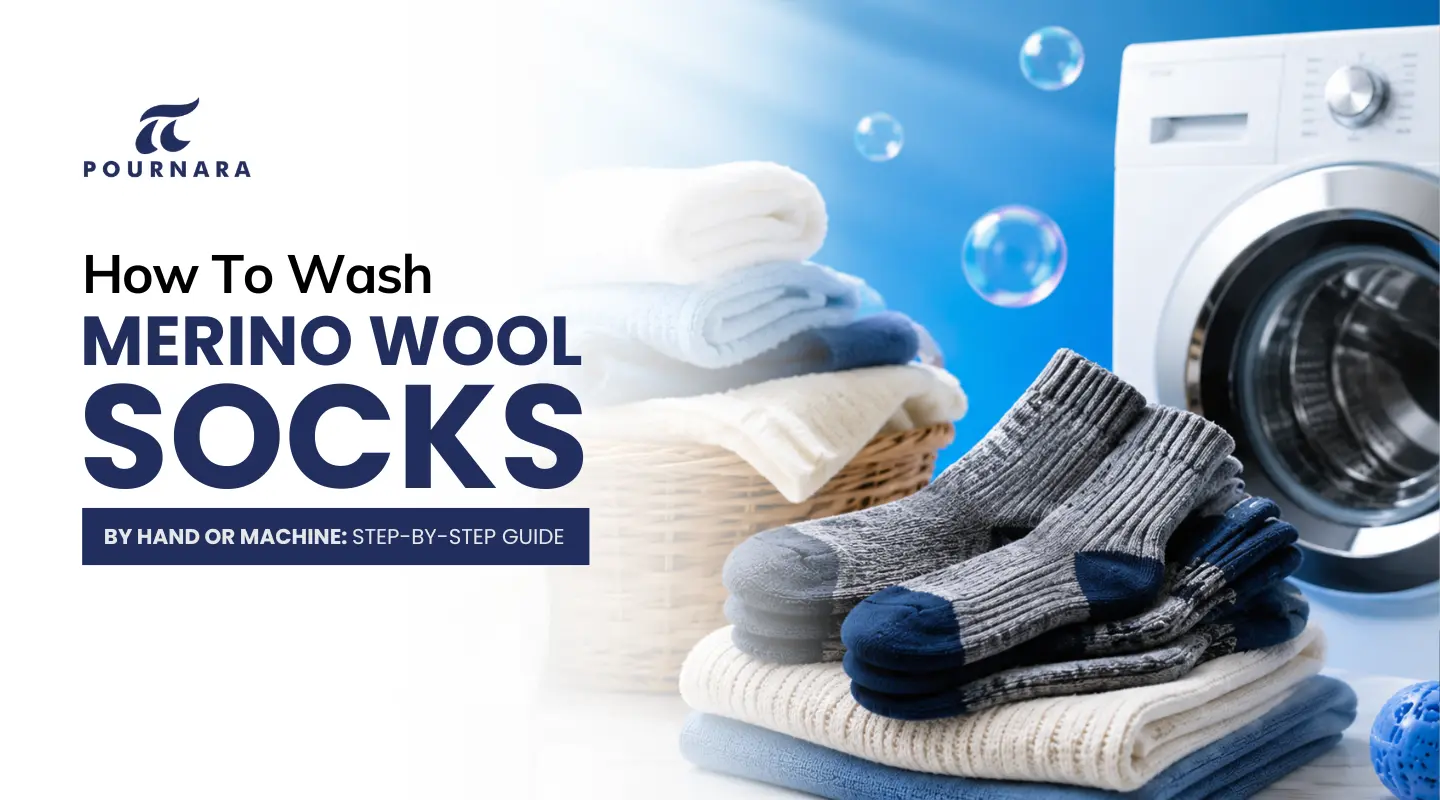
Machine wash wool blends in cold water on gentle cycles. Modern merino blends withstand regular washing unlike traditional 100% wool requiring hand washing. Turn socks inside out protecting exterior finish from friction.
Air dry whenever possible extending sock lifespan by 150%. Heat damages elastic fibers and can cause shrinkage in wool content above 75%. If using dryers, select low heat settings.
Store wool socks folded rather than balled. Rolling stresses elastic causing premature wear. Flat folding maintains shape and elastic integrity through storage periods.
Check out this article, merino wool socks winter benefits.
Quality Indicators to Check:
Cheap wool blends often use inferior fibers creating scratchy, pill-prone socks. The 40-plus micron fibers defeat wool’s comfort advantages. Quality merino costs more initially but lasts 3 to 4 times longer.
Pournara has manufactured premium socks in Athens since 1949, understanding wool’s exceptional properties through 75 years of expertise. Our Wool Collection features carefully selected merino blends optimized for comfort and durability.
Our wool offerings include:
Each pair combines 220-needle construction with premium merino wool sourced through ethical partnerships. The Greek tradition of textile excellence ensures every sock delivers the performance that makes wool the enduring choice in 2026 and beyond.
Pournara
We firmly believe that the internet should be available and accessible to anyone, and are committed to providing a website that is accessible to the widest possible audience, regardless of circumstance and ability.
To fulfill this, we aim to adhere as strictly as possible to the World Wide Web Consortium’s (W3C) Web Content Accessibility Guidelines 2.1 (WCAG 2.1) at the AA level. These guidelines explain how to make web content accessible to people with a wide array of disabilities. Complying with those guidelines helps us ensure that the website is accessible to all people: blind people, people with motor impairments, visual impairment, cognitive disabilities, and more.
This website utilizes various technologies that are meant to make it as accessible as possible at all times. We utilize an accessibility interface that allows persons with specific disabilities to adjust the website’s UI (user interface) and design it to their personal needs.
Additionally, the website utilizes an AI-based application that runs in the background and optimizes its accessibility level constantly. This application remediates the website’s HTML, adapts Its functionality and behavior for screen-readers used by the blind users, and for keyboard functions used by individuals with motor impairments.
If you’ve found a malfunction or have ideas for improvement, we’ll be happy to hear from you. You can reach out to the website’s operators by using the following email
Our website implements the ARIA attributes (Accessible Rich Internet Applications) technique, alongside various different behavioral changes, to ensure blind users visiting with screen-readers are able to read, comprehend, and enjoy the website’s functions. As soon as a user with a screen-reader enters your site, they immediately receive a prompt to enter the Screen-Reader Profile so they can browse and operate your site effectively. Here’s how our website covers some of the most important screen-reader requirements, alongside console screenshots of code examples:
Screen-reader optimization: we run a background process that learns the website’s components from top to bottom, to ensure ongoing compliance even when updating the website. In this process, we provide screen-readers with meaningful data using the ARIA set of attributes. For example, we provide accurate form labels; descriptions for actionable icons (social media icons, search icons, cart icons, etc.); validation guidance for form inputs; element roles such as buttons, menus, modal dialogues (popups), and others. Additionally, the background process scans all the website’s images and provides an accurate and meaningful image-object-recognition-based description as an ALT (alternate text) tag for images that are not described. It will also extract texts that are embedded within the image, using an OCR (optical character recognition) technology. To turn on screen-reader adjustments at any time, users need only to press the Alt+1 keyboard combination. Screen-reader users also get automatic announcements to turn the Screen-reader mode on as soon as they enter the website.
These adjustments are compatible with all popular screen readers, including JAWS and NVDA.
Keyboard navigation optimization: The background process also adjusts the website’s HTML, and adds various behaviors using JavaScript code to make the website operable by the keyboard. This includes the ability to navigate the website using the Tab and Shift+Tab keys, operate dropdowns with the arrow keys, close them with Esc, trigger buttons and links using the Enter key, navigate between radio and checkbox elements using the arrow keys, and fill them in with the Spacebar or Enter key.Additionally, keyboard users will find quick-navigation and content-skip menus, available at any time by clicking Alt+1, or as the first elements of the site while navigating with the keyboard. The background process also handles triggered popups by moving the keyboard focus towards them as soon as they appear, and not allow the focus drift outside it.
Users can also use shortcuts such as “M” (menus), “H” (headings), “F” (forms), “B” (buttons), and “G” (graphics) to jump to specific elements.
We aim to support the widest array of browsers and assistive technologies as possible, so our users can choose the best fitting tools for them, with as few limitations as possible. Therefore, we have worked very hard to be able to support all major systems that comprise over 95% of the user market share including Google Chrome, Mozilla Firefox, Apple Safari, Opera and Microsoft Edge, JAWS and NVDA (screen readers).
Despite our very best efforts to allow anybody to adjust the website to their needs. There may still be pages or sections that are not fully accessible, are in the process of becoming accessible, or are lacking an adequate technological solution to make them accessible. Still, we are continually improving our accessibility, adding, updating and improving its options and features, and developing and adopting new technologies. All this is meant to reach the optimal level of accessibility, following technological advancements. For any assistance, please reach out to