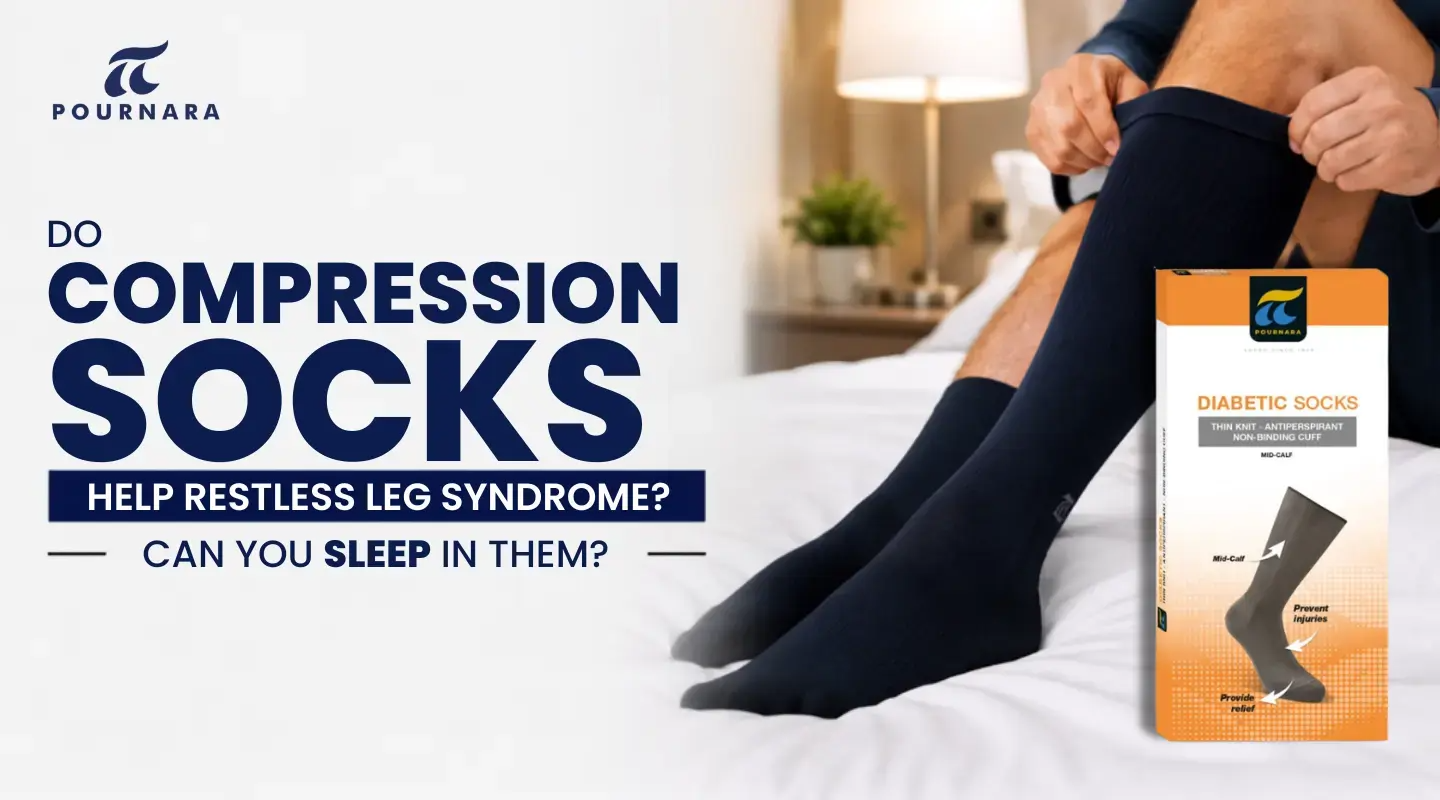
If you’ve been tossing and turning with restless legs, here’s some good news: compression socks can actually help, and there’s real research to back it up. The catch is timing. Most doctors say wearing them during the day works better than sleeping in them, since the goal is to stop fluid from building up in your legs before bedtime, not to compress your legs while you’re already asleep. We’ll walk through exactly why that is, and when sleeping in them might still make sense for you.
Restless leg syndrome, also called Willis Ekbom disease, is a neuro sensory disorder, not simply a case of twitchy legs at bedtime. People with RLS experience an uncomfortable, often irresistible urge to move their legs, usually paired with sensations described as crawling, tingling, aching, or pulling. Symptoms typically worsen in the evening and while sitting or lying still, which is exactly why RLS is such a disruptive sleep problem rather than just a daytime nuisance.
This is more common than many people realize. According to a peer reviewed clinical review, roughly 8 percent of U.S. adults experience RLS symptoms of any frequency each year, and about 3 percent experience symptoms that are moderately to severely distressing at least twice a week, according to research published on PubMed. Women are affected roughly twice as often as men. Rates are notably higher among specific groups, including approximately 22 percent of women in the third trimester of pregnancy, about 24 percent of people with iron deficiency anemia, roughly 21.5 percent of people with peripheral neuropathy, and about 24 percent of people with kidney disease.
The exact cause of RLS is not fully understood, but researchers generally point to a combination of factors. Many cases are linked to how the brain processes iron and regulates dopamine, a chemical messenger involved in muscle movement. Low iron levels, even without full blown anemia, are a common and often correctable contributor. Pregnancy, chronic kidney disease, peripheral neuropathy, family history, and certain medications can also trigger or worsen symptoms. This matters for anyone considering compression socks as a solution, because a sock addresses symptoms and comfort, not the underlying reason the nervous system is misfiring. That distinction shapes realistic expectations for what compression can and cannot do.
The most direct evidence comes from a 2024 randomized controlled trial involving 63 pregnant women with restless leg syndrome, published via PMC. Participants wore either graduated compression stockings or a placebo stocking for three weeks. Both groups saw improvement, but the group wearing genuine graduated compression stockings showed significantly greater reductions in RLS severity, along with better sleep quality and well being scores, compared to the placebo group.
The proposed mechanism is fairly straightforward. Graduated compression applies more pressure at the ankle and gradually less higher up the leg, which supports venous return and helps prevent blood and fluid from pooling in the lower legs. Since fluid pooling and venous congestion are believed to contribute to the uncomfortable sensations behind RLS for some people, reducing that pooling may reduce the intensity of symptoms.
It is worth being honest about the limits of the research too. This is still a relatively small and emerging body of evidence, largely built on modest sample sizes and specific populations such as pregnant women. Compression socks appear to be a genuinely helpful supportive tool for many people with mild to moderate RLS, but they are not a verified cure, and they will not resolve RLS that stems from an underlying issue like significant iron deficiency or advanced kidney disease without also addressing that root cause.
This is where a lot of the confusion happens, and the short answer is that most vascular and sleep specialists recommend wearing compression socks during the day rather than overnight, even though the RLS discomfort itself tends to strike at night.
The logic is about timing, not intensity. Compression works best at preventing fluid from pooling in the legs while you are upright and active during the day. If you put the socks on in the morning and wear them through your normal activities, your legs carry less accumulated fluid by the time you lie down at night, which can translate into fewer nighttime symptoms. Supporting evidence for this daytime first approach comes from a peer reviewed study on compression stockings and nighttime symptoms published on PMC, which found that wearing compression stockings during the day meaningfully reduced nighttime symptoms tied to fluid shifting from the legs once a person lies down, along with improving related sleep disruption. The same basic principle, managing fluid before bedtime rather than compressing the legs during sleep itself, is generally applied to RLS as well.
Standard daytime compression socks, especially moderate to firm compression levels, are built for an upright, active leg, not for hours of continuous recumbent wear. Sleeping in them nightly is not automatically dangerous for most healthy adults, but it is also not the best supported use case, and some people find firmer compression uncomfortable or restrictive while lying down.
If you specifically want overnight support, a lighter compression level, sometimes described as mild, is generally more appropriate for sleep than the moderate to firm compression typically used during the day. Some brands also make garments designed specifically for nighttime wear, which use gentler, more consistent pressure rather than the graduated compression built for standing and walking. If you have a circulatory condition, diabetes, or any concern about wearing compression overnight, check with a doctor before making it a regular nightly habit.
Compression socks are safe for most healthy adults, but a few groups should get medical clearance first:
Compression socks work best as one part of a broader approach, not a standalone fix. Other commonly recommended steps include:
General guidance on evaluating and managing RLS, including when to seek medical treatment, is also available through resources like Mayo Clinic.
If you want to try compression as part of your RLS routine, the practical advice from this review is simple: wear them consistently during the day, choose a fit that feels snug but never painful, and treat firm, moderate compression as a daytime tool rather than a sleep garment. Pournara’s Medical sock collection is built with graduated compression and reinforced, all day construction, the kind of daily wear scenario where the research above shows the most consistent benefit. If you are new to compression levels and sizing, our Compression Socks Guide walks through mmHg strength, fit, and how to choose the right pair for your needs.
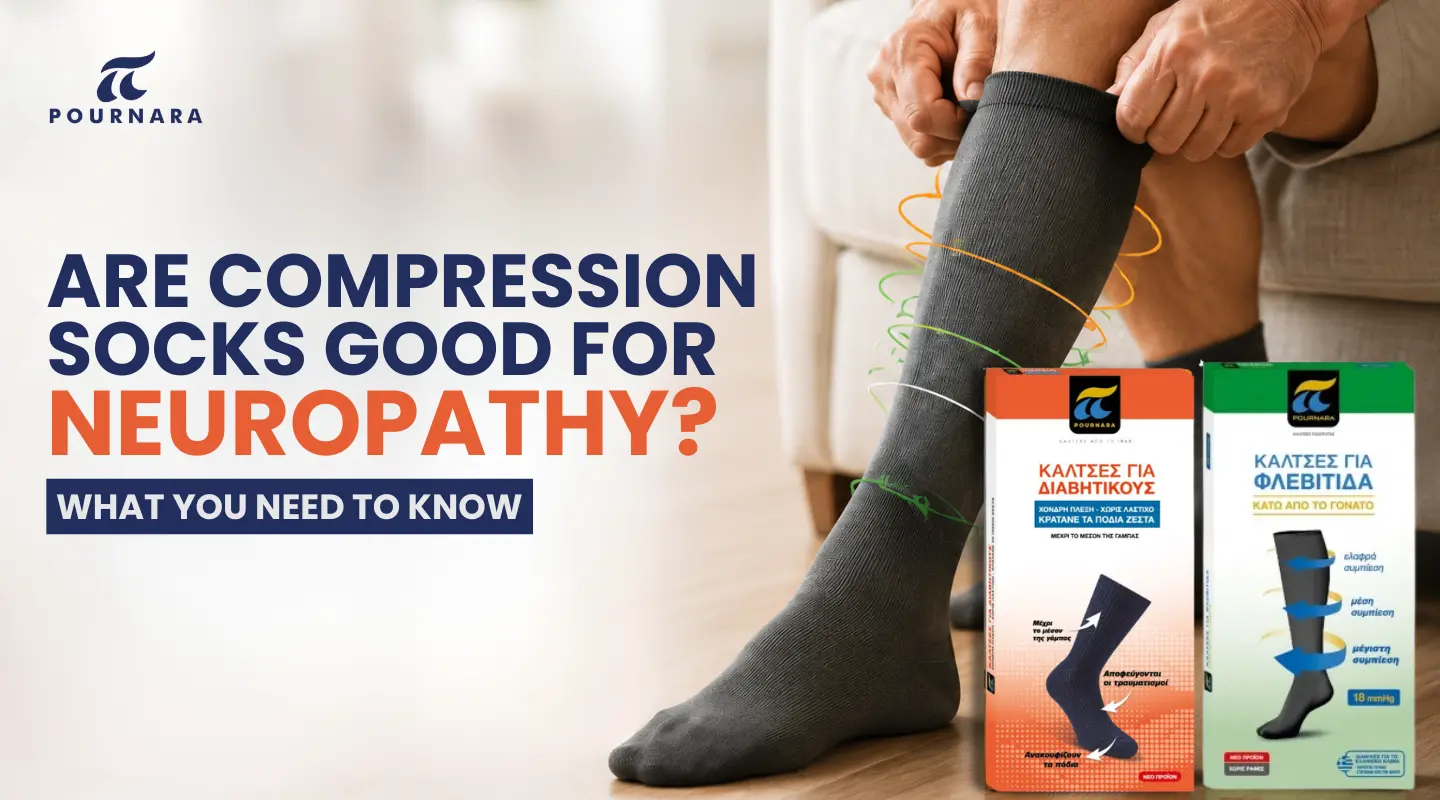
If nerve related leg discomfort is also part of the picture, our article on whether compression socks help with neuropathy covers that related use case, and our guide on wearing compression socks in summer addresses a common practical concern, staying comfortable in compression during warmer months. If leg discomfort is more activity related than RLS related, our piece on compression socks for shin splints may also be useful.
You can, and it is not inherently unsafe for most healthy adults, but most specialists recommend wearing compression socks during the day instead. Compression works by limiting fluid pooling before you lie down, so daytime wear tends to be more effective at reducing nighttime RLS symptoms than sleeping in the socks themselves.
Yes, for many people. A 2024 randomized controlled trial found that graduated compression stockings significantly reduced RLS severity and improved sleep quality compared to a placebo stocking. Results vary by individual, and compression works best alongside addressing any underlying cause, such as iron deficiency.
Mild to moderate compression, generally in the 15 to 20 mmHg range, is a common starting point for RLS and everyday circulatory support. Higher compression levels are typically reserved for specific medical conditions and should be recommended by a doctor.
For most healthy adults, yes, daily daytime wear is considered safe and is actually the use case with the most supporting evidence. People with circulatory conditions, diabetes with neuropathy, or skin integrity issues should confirm daily wear with a doctor first.
Research specifically supports this use case. A randomized controlled trial in pregnant women with RLS found that graduated compression stockings reduced symptom severity and improved sleep quality more than a placebo stocking. Pregnant women should still confirm compression use with their doctor or midwife.
In the pregnancy based clinical trial, participants wore compression stockings for three weeks before researchers measured meaningful improvement. Individual results vary, and consistent daily wear tends to matter more than any single day of use.
If symptoms occur several nights a week, significantly disrupt sleep, worsen over time, or are accompanied by signs of iron deficiency, kidney issues, or neuropathy, it is time to see a doctor rather than relying on socks alone. A physician can check iron levels, review medications, and discuss treatment options such as iron supplementation or prescription therapies when appropriate.
Restless leg syndrome is a real, common, and often frustrating sleep disorder, and the evidence so far suggests graduated compression socks can genuinely help many people manage its symptoms, particularly when worn consistently during the day rather than overnight. Sleeping in compression socks is not the best supported approach, and firmer daytime compression is generally better suited to waking hours than hours of continuous rest. Compression works best as one part of a broader plan that includes addressing any underlying cause and talking with a doctor if symptoms are frequent or severe.
If you want to try daytime graduated compression as part of your routine, explore Pournara’s compression sock collection.
Pournara
We firmly believe that the internet should be available and accessible to anyone, and are committed to providing a website that is accessible to the widest possible audience, regardless of circumstance and ability.
To fulfill this, we aim to adhere as strictly as possible to the World Wide Web Consortium’s (W3C) Web Content Accessibility Guidelines 2.1 (WCAG 2.1) at the AA level. These guidelines explain how to make web content accessible to people with a wide array of disabilities. Complying with those guidelines helps us ensure that the website is accessible to all people: blind people, people with motor impairments, visual impairment, cognitive disabilities, and more.
This website utilizes various technologies that are meant to make it as accessible as possible at all times. We utilize an accessibility interface that allows persons with specific disabilities to adjust the website’s UI (user interface) and design it to their personal needs.
Additionally, the website utilizes an AI-based application that runs in the background and optimizes its accessibility level constantly. This application remediates the website’s HTML, adapts Its functionality and behavior for screen-readers used by the blind users, and for keyboard functions used by individuals with motor impairments.
If you’ve found a malfunction or have ideas for improvement, we’ll be happy to hear from you. You can reach out to the website’s operators by using the following email
Our website implements the ARIA attributes (Accessible Rich Internet Applications) technique, alongside various different behavioral changes, to ensure blind users visiting with screen-readers are able to read, comprehend, and enjoy the website’s functions. As soon as a user with a screen-reader enters your site, they immediately receive a prompt to enter the Screen-Reader Profile so they can browse and operate your site effectively. Here’s how our website covers some of the most important screen-reader requirements, alongside console screenshots of code examples:
Screen-reader optimization: we run a background process that learns the website’s components from top to bottom, to ensure ongoing compliance even when updating the website. In this process, we provide screen-readers with meaningful data using the ARIA set of attributes. For example, we provide accurate form labels; descriptions for actionable icons (social media icons, search icons, cart icons, etc.); validation guidance for form inputs; element roles such as buttons, menus, modal dialogues (popups), and others. Additionally, the background process scans all the website’s images and provides an accurate and meaningful image-object-recognition-based description as an ALT (alternate text) tag for images that are not described. It will also extract texts that are embedded within the image, using an OCR (optical character recognition) technology. To turn on screen-reader adjustments at any time, users need only to press the Alt+1 keyboard combination. Screen-reader users also get automatic announcements to turn the Screen-reader mode on as soon as they enter the website.
These adjustments are compatible with all popular screen readers, including JAWS and NVDA.
Keyboard navigation optimization: The background process also adjusts the website’s HTML, and adds various behaviors using JavaScript code to make the website operable by the keyboard. This includes the ability to navigate the website using the Tab and Shift+Tab keys, operate dropdowns with the arrow keys, close them with Esc, trigger buttons and links using the Enter key, navigate between radio and checkbox elements using the arrow keys, and fill them in with the Spacebar or Enter key.Additionally, keyboard users will find quick-navigation and content-skip menus, available at any time by clicking Alt+1, or as the first elements of the site while navigating with the keyboard. The background process also handles triggered popups by moving the keyboard focus towards them as soon as they appear, and not allow the focus drift outside it.
Users can also use shortcuts such as “M” (menus), “H” (headings), “F” (forms), “B” (buttons), and “G” (graphics) to jump to specific elements.
We aim to support the widest array of browsers and assistive technologies as possible, so our users can choose the best fitting tools for them, with as few limitations as possible. Therefore, we have worked very hard to be able to support all major systems that comprise over 95% of the user market share including Google Chrome, Mozilla Firefox, Apple Safari, Opera and Microsoft Edge, JAWS and NVDA (screen readers).
Despite our very best efforts to allow anybody to adjust the website to their needs. There may still be pages or sections that are not fully accessible, are in the process of becoming accessible, or are lacking an adequate technological solution to make them accessible. Still, we are continually improving our accessibility, adding, updating and improving its options and features, and developing and adopting new technologies. All this is meant to reach the optimal level of accessibility, following technological advancements. For any assistance, please reach out to