
You do not have to be a doctor or an athlete to benefit from compression socks. Millions of everyday people, from nurses and travelers to office workers and runners, wear them to feel better on their feet. But with so many options, mmHg levels, sizes, and materials, knowing where to start can feel overwhelming.
This complete guide covers everything you need to know about compression socks. It explains what they do, who should wear them, the different types, pressure levels, how to measure your size, and how to choose the right pair. By the end, you will know exactly which compression sock is right for you.
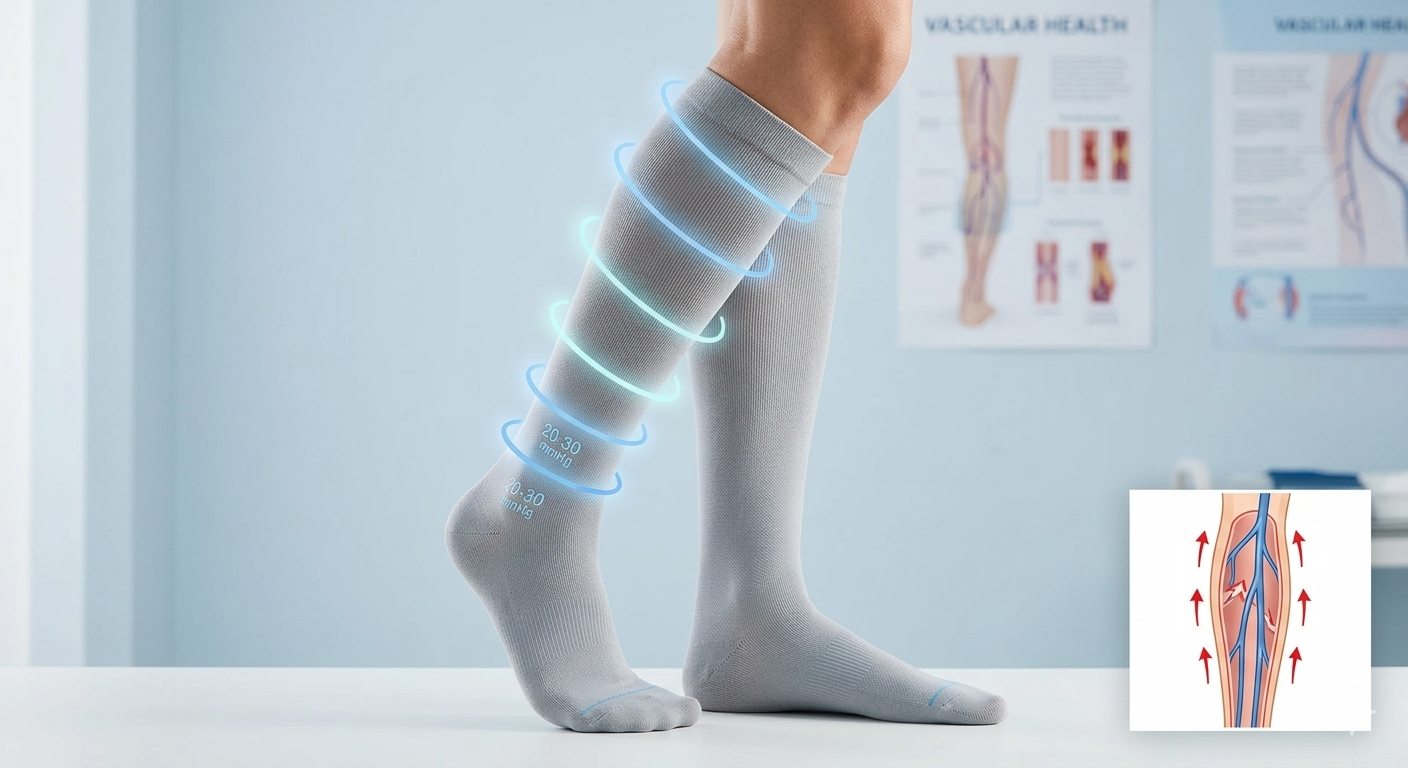
Compression socks are specially designed socks that apply gentle, graduated pressure to your legs and feet. Unlike regular socks, they are engineered to squeeze your legs slightly, tighter at the ankle and gradually looser as they move up your leg. This gradient pressure helps improve blood circulation from your feet back up to your heart.
Compression socks work by applying graduated pressure to your lower legs. This pressure gently pushes blood upward through your veins, preventing it from pooling in your feet and ankles. They also support the walls of your veins, which helps them function more efficiently. The result is better circulation, less swelling, and reduced fatigue in your legs.
Compression socks are used for a wide range of purposes, including:
Almost anyone can benefit from wearing compression socks. However, they are especially helpful for people who:
Check out this article, Compression Socks for Shin Splints: Do They Really Help?
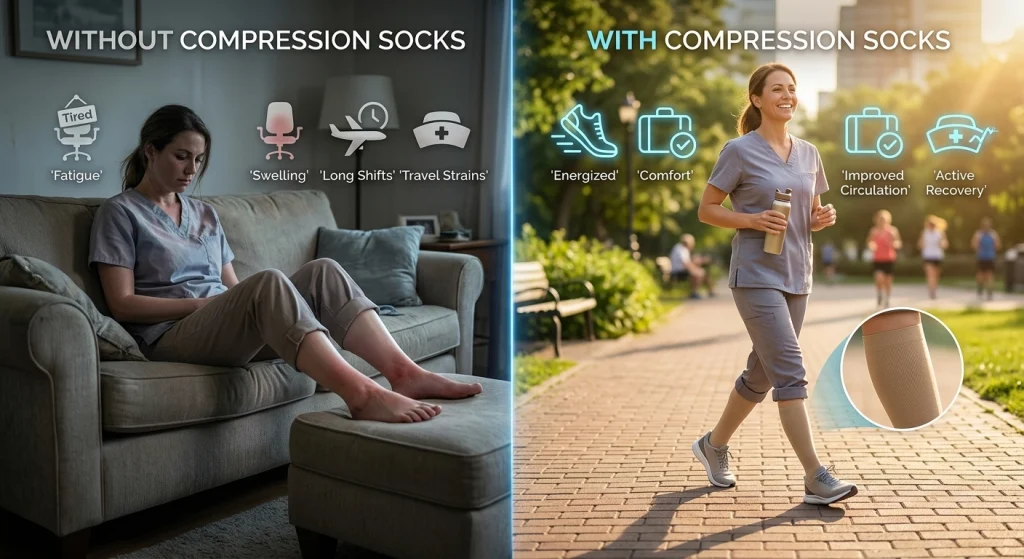
Many people wear compression socks for different reasons. Some wear them for medical conditions, while others wear them simply because they make their legs feel better at the end of a long day. Here are the key reasons why compression socks are worth adding to your daily routine.
Beyond medical use, compression socks offer real everyday benefits for active people:
Travel: Long flights and road trips reduce leg movement, which slows circulation. Compression socks keep blood flowing and prevent that uncomfortable swelling you feel after a long journey.
Sports and Athletics: Many runners, cyclists, and gym-goers wear compression socks to increase oxygen delivery to muscles during exercise and speed up recovery afterward. They also reduce muscle vibration, which lowers fatigue.
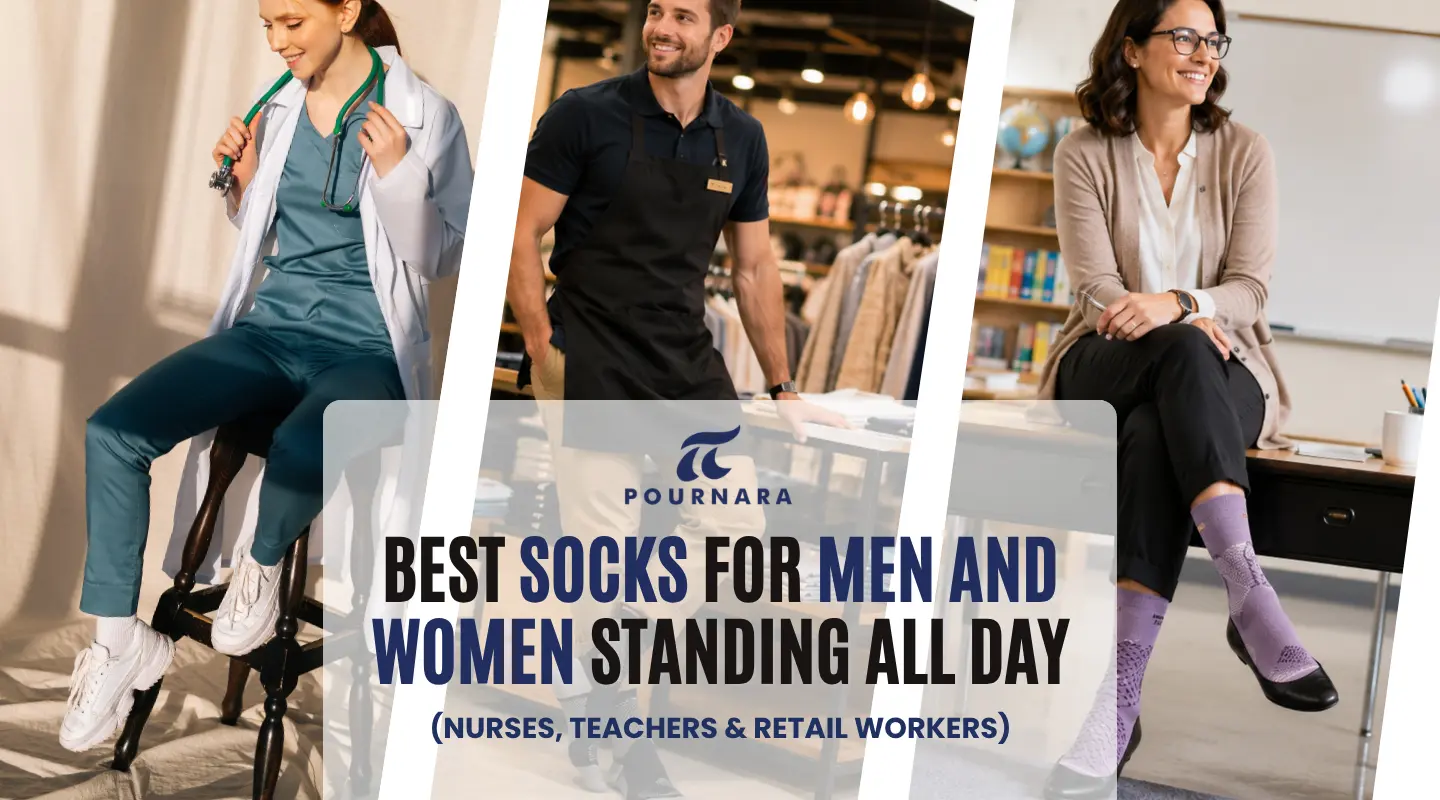
Work: If you spend long hours on your feet or sitting at a desk, your legs often feel heavy and tired by the end of the day. Compression socks reduce this fatigue and keep your legs feeling fresh longer.
The best time to wear compression socks depends on your needs. Generally, you should put them on in the morning before swelling begins. Wear them throughout the day and remove them before bedtime. For travel, put them on before boarding and wear them for the full duration of your journey. For sports, wear them during and after activity for maximum benefit.
Compression socks are safe for most people. However, like any product that applies pressure to your body, they can cause some side effects, especially if worn incorrectly or if you choose the wrong size or compression level.
Compression socks are not suitable for everyone. You should avoid wearing them, or consult a doctor first, if you have any of the following conditions:
Stop wearing compression socks and see a doctor if you notice increased pain or swelling, skin discoloration or blistering, numbness or loss of feeling in your feet, or if your symptoms worsen rather than improve. Always consult your doctor before using compression socks for a diagnosed medical condition.
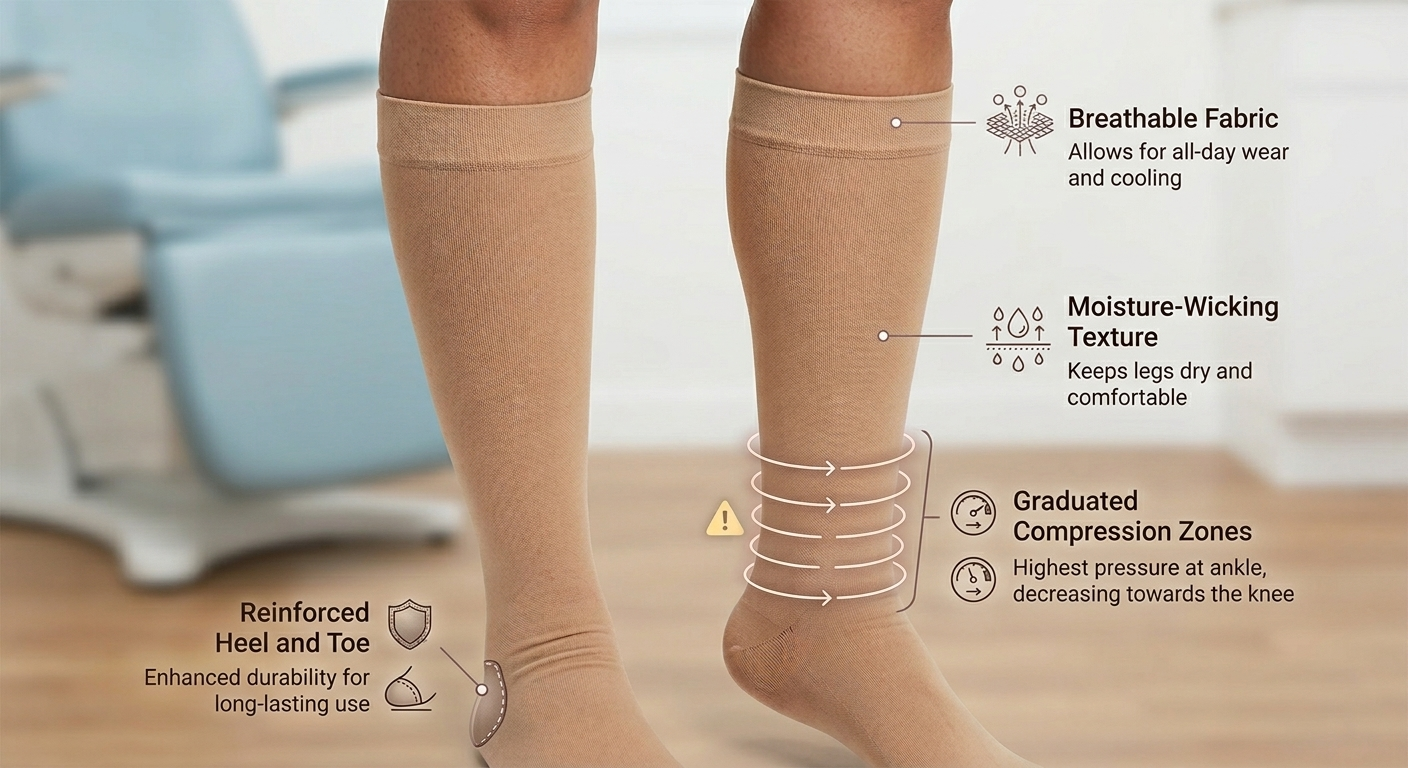
Not all compression socks are the same. The material, construction, and design all affect how comfortable and effective they are. Here is what to look for when choosing a pair.
Bamboo compression socks are made from bamboo-derived fibers, which are naturally soft, antibacterial, and moisture-wicking. They are an excellent choice for people with sensitive skin or allergies. Bamboo fibers are also eco-friendly and temperature-regulating, keeping your feet cool in summer and warm in winter.
Merino wool compression socks offer exceptional warmth and moisture management. Merino wool naturally wicks sweat away from the skin, resists odors, and feels incredibly soft, unlike traditional wool which can be itchy. These socks are ideal for cold weather, hiking, and outdoor activities where temperature regulation matters.
Mercerized cotton Compression Socks is cotton that has been treated to increase its strength, luster, and softness. At Pournara, we use 100% mercerized cotton with a patented weaving technique to create compression socks that hold their shape, maintain consistent pressure, and stay comfortable all day long. Mercerized cotton socks are breathable, durable, and feel silky smooth against your skin, making them ideal for everyday wear.
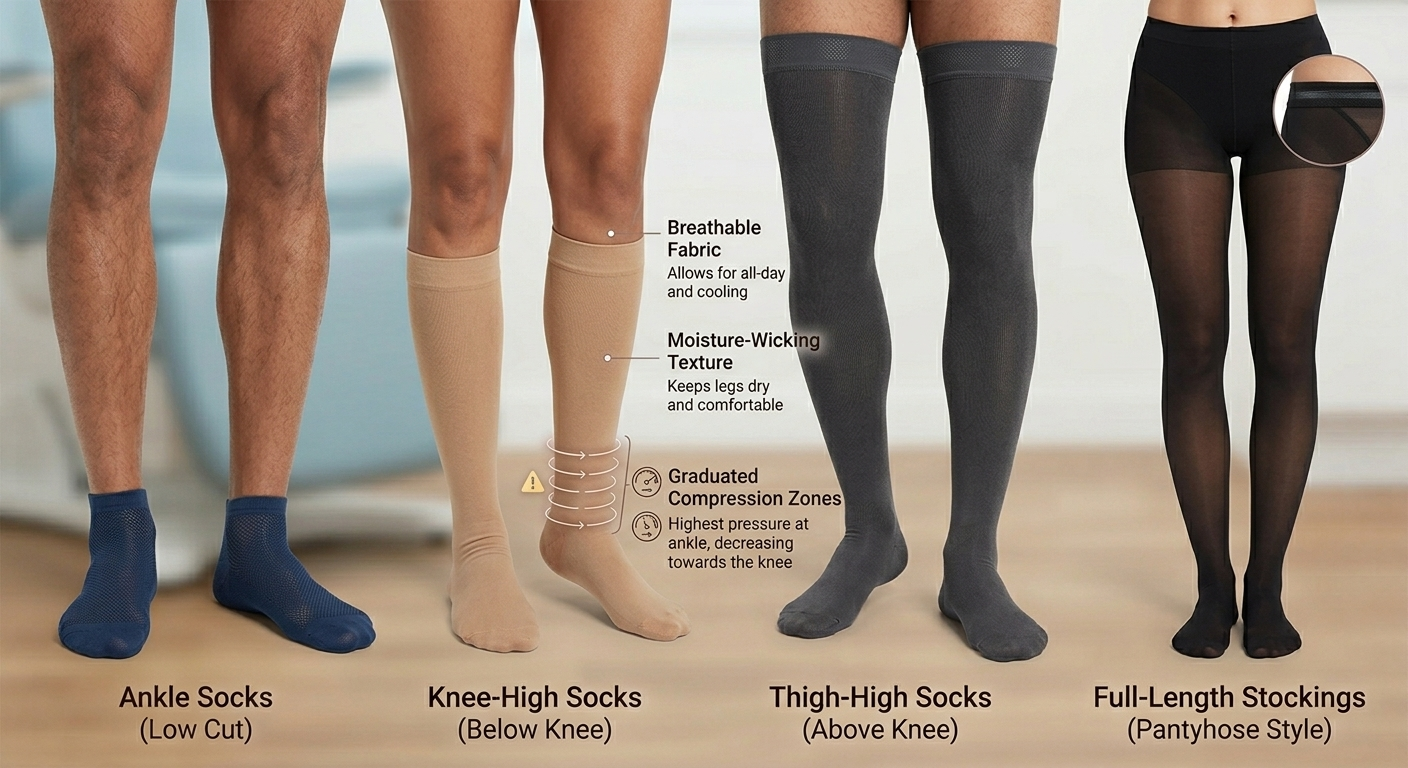
Compression socks come in different styles and lengths. Each type serves a different purpose and suits different needs.
Knee high compression socks are the most popular type. They cover the foot and extend up to just below the knee. They are ideal for everyday use, travel, and managing conditions like varicose veins and mild edema. Most people who are new to compression socks start with knee high styles because they are easy to put on and comfortable for all-day wear.
Thigh high compression stockings extend from the foot all the way up to the thigh. They are often prescribed for post-surgical recovery, severe venous insufficiency, and lymphedema. Because they cover a larger area, they provide more comprehensive circulation support. However, they can be more challenging to put on and keep in place throughout the day.
Ankle compression socks cover just the foot and ankle area. They are a great option for people who experience swelling or discomfort specifically in the ankle and foot. They are also popular among athletes for arch support and plantar fasciitis relief. Because they are shorter, many people find them more comfortable in warm weather.
Quarter compression socks sit just above the ankle and cover the foot. They offer mild compression focused on the foot and lower ankle area. They are popular for casual wear, light athletic activities, and everyday comfort. Quarter socks are a good entry-level option for people trying compression socks for the first time.
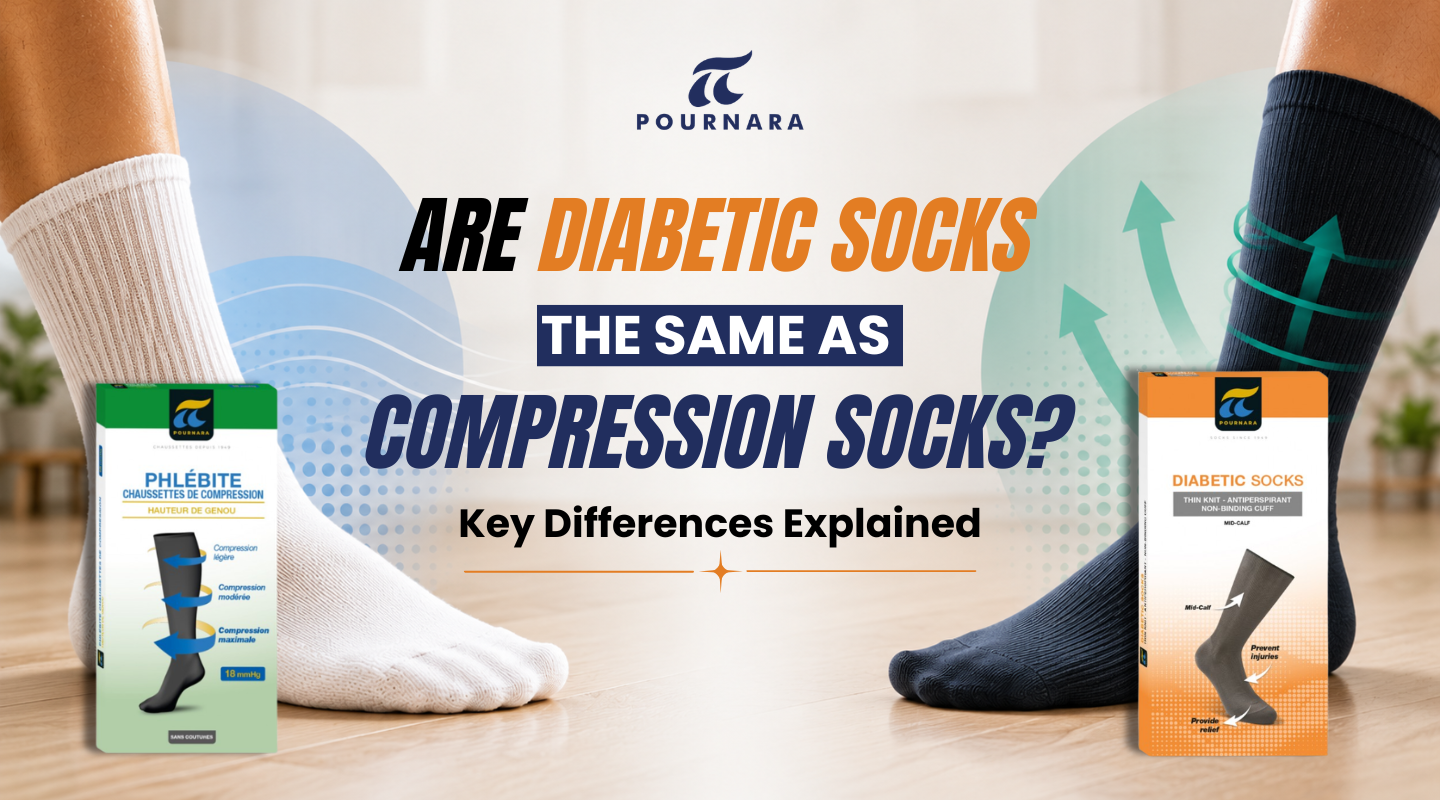
Check out this article, What’s the Real Difference Between Diabetic and Compression Socks?
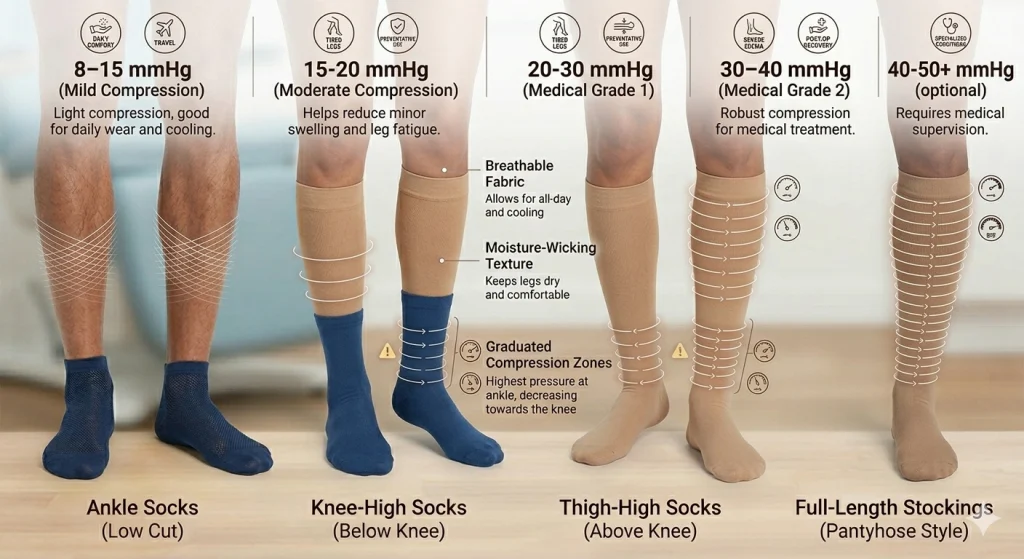
mmHg stands for millimeters of mercury, the unit used to measure the pressure applied by compression socks. Understanding mmHg levels is the most important step in choosing the right compression sock. The higher the mmHg number, the more pressure the sock applies.
mmHg is a pressure measurement unit. In compression socks, it tells you how tightly the sock squeezes your leg. For example, a sock rated at 20-30 mmHg applies more pressure than one rated at 8-15 mmHg. The right mmHg level for you depends on your specific needs, whether you are looking for everyday comfort or medical-grade support.
This is the lightest level of compression. It provides a gentle squeeze that improves circulation without feeling restrictive. It is perfect for people who are on their feet all day, want to prevent tired legs, or are simply trying compression socks for the first time. No prescription is needed.
This is the most popular over-the-counter compression level. It provides moderate support and is ideal for travel, mild swelling, varicose veins, and pregnancy. Most people who use compression socks for everyday comfort and prevention choose this level. No prescription is required.
This is a medical-grade compression level. It is commonly recommended for moderate varicose veins, post-surgical recovery, DVT prevention, and moderate edema. Although available without a prescription, it is best to consult your doctor before using this level, especially if you have an underlying medical condition.
This is the highest standard compression level and is typically prescribed by a doctor. It is used for severe venous insufficiency, lymphedema, severe varicose veins, and post-thrombotic syndrome. This level applies significant pressure and should only be used under medical supervision.
Use the table below to find the right mmHg level based on your needs:
| mmHg Level | Who It Is For | Best Use | Prescription Needed? |
| 8-15 mmHg | Beginners, everyday users | Daily comfort, tired legs | No |
| 15-20 mmHg | Travelers, workers, pregnant women | Travel, long hours standing or sitting | No |
| 20-30 mmHg | Varicose veins, post-surgery | Medical-grade support, recovery | Recommended |
| 30-40 mmHg | Severe venous conditions | Lymphedema, severe DVT | Yes |
Choosing the right compression sock can feel confusing at first. However, if you focus on three key things, your purpose, your size, and your preferred material, the decision becomes much easier.
Size is critical when it comes to compression socks. An incorrect size reduces effectiveness and may even cause harm. Most brands size compression socks based on shoe size and calf circumference. Always measure both before purchasing. If you fall between sizes, size up for more comfort or size down for more compression.
Compression socks for men and women are designed slightly differently to account for differences in leg shape, calf size, and foot width. Men’s compression socks are typically wider in the calf and foot, while women’s styles are cut slimmer with a more tapered fit. Some brands offer unisex options, but gender-specific styles tend to provide a better fit and more effective compression.
Getting the right measurements is the most important step in buying compression socks. Even the best pair will not work properly if it does not fit your leg correctly.
Follow these steps to measure your legs correctly:
Most compression sock brands use the following general sizing guide based on shoe size and calf circumference:
| Size | Shoe Size (US) | Calf Circumference | Ankle Circumference |
| Small | 4 – 6 | 10 – 13 inches | 7 – 8 inches |
| Medium | 6 – 9 | 12 – 15 inches | 8 – 9 inches |
| Large | 9 – 12 | 14 – 17 inches | 9 – 10 inches |
| X-Large | 12+ | 16 – 20 inches | 10 – 11 inches |
Note: Always refer to the specific brand’s size chart for the most accurate fit.
Compression socks can be tricky to put on, especially at higher compression levels. Here is how to do it correctly:
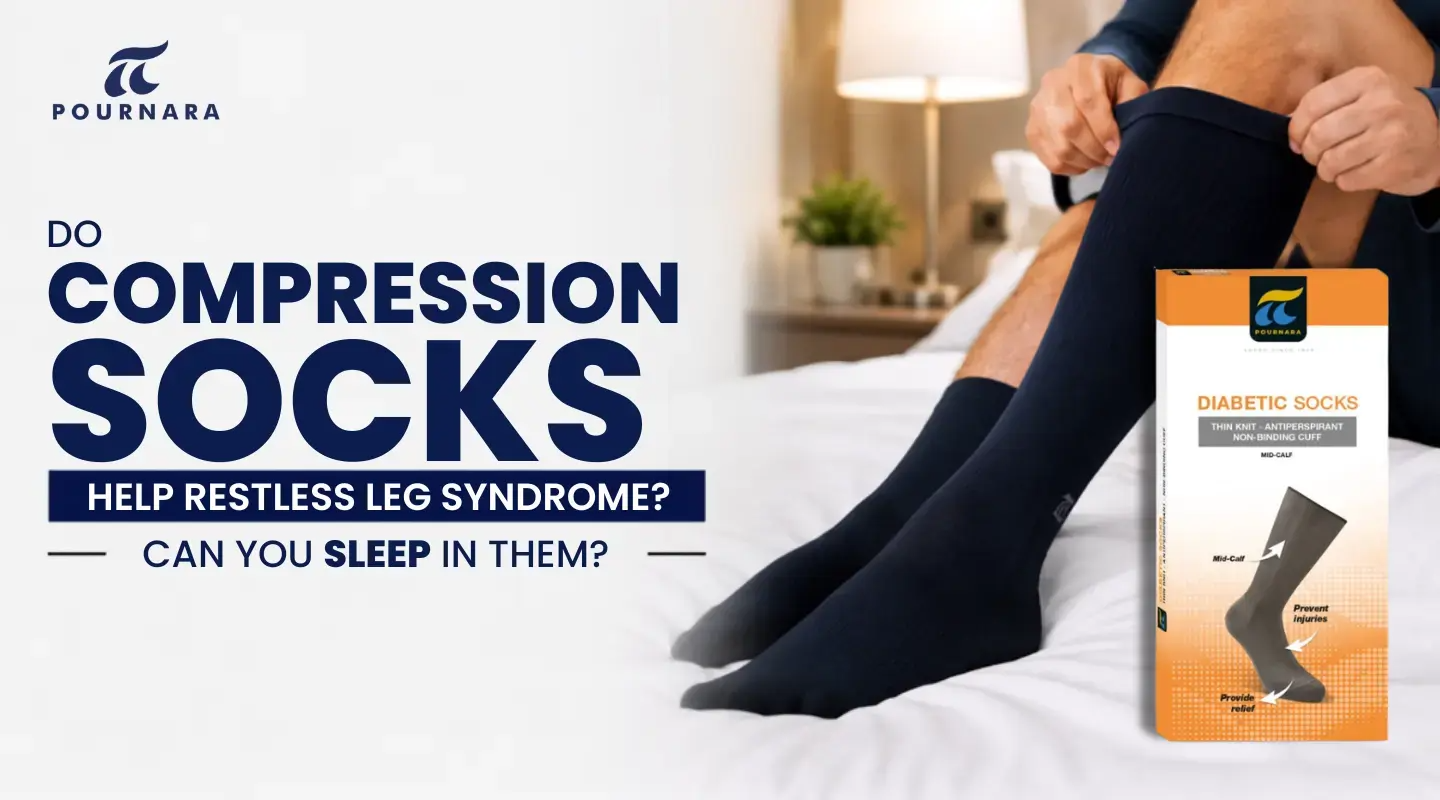
For most people, wearing compression socks throughout the day, typically 8 to 12 hours, is safe and recommended. Put them on in the morning and remove them before bed. Sleeping in compression socks is generally not necessary and not recommended unless specifically advised by your doctor. If you are wearing them for travel, keep them on for the full duration of your flight or journey.
Proper care extends the life of your compression socks and maintains their compression effectiveness:
You can buy compression socks at pharmacies, medical supply stores, department stores, and online retailers. When shopping online, look for brands that clearly state their mmHg levels, provide a detailed size chart, use high-quality materials, and have strong customer reviews.
For premium quality compression socks built on 75 years of Greek craftsmanship, visit Pournara at shoppournara.com. Every pair is crafted using 100% mercerized cotton with a patented weaving technique that maintains consistent compression, holds its shape wash after wash, and feels comfortable from morning to night.
Yes, most people can safely wear compression socks every day. In fact, daily use is recommended for people who stand or sit for long hours, travel frequently, or have mild venous conditions. Always remove them before sleeping.
Compression socks are safe for most healthy adults. However, people with severe peripheral artery disease, skin infections, or certain heart and kidney conditions should consult their doctor before wearing them.
If you are new to compression socks, start with 8-15 mmHg for everyday comfort, or 15-20 mmHg if you travel frequently or spend long hours on your feet. These levels provide noticeable benefits without feeling overly restrictive.
In most cases, no. Compression socks are designed for use when you are upright and active, as gravity affects circulation. When you lie down, your circulation already improves naturally. Only wear them during sleep if specifically prescribed by your doctor.
Yes, this is one of their primary benefits. Compression socks apply graduated pressure that reduces fluid buildup in the tissues, which directly reduces swelling in the feet, ankles, and lower legs.
Absolutely. Many professional and recreational athletes wear compression socks during and after exercise. They improve oxygen delivery to muscles during activity and speed up recovery by reducing muscle soreness and inflammation afterward.
Regular socks provide no therapeutic pressure. Compression socks are engineered to deliver graduated pressure, stronger at the ankle and decreasing up the leg, which actively improves blood circulation. The materials and construction are also significantly different.
Compression socks should feel snug and supportive, not painful. You should feel gentle pressure, especially around the ankle. If you experience numbness, tingling, or significant discomfort, the socks may be too tight or the wrong size.
People with diabetes need to be careful with compression socks. Standard compression socks may not be suitable if you have peripheral neuropathy or poor circulation. Diabetic-friendly compression socks with non-binding tops and minimal seams are a better option. Always consult your doctor first.
Yes. Compression socks are one of the most commonly recommended non-surgical treatments for varicose veins. They reduce the pressure in the veins and help prevent the condition from worsening. A level of 15-20 mmHg or 20-30 mmHg is typically recommended, depending on severity.
Compression socks are one of the simplest and most effective tools for improving leg health, reducing fatigue, and preventing serious circulatory conditions. Whether you are a traveler, an athlete, a healthcare worker, or someone managing a venous condition, the right pair of compression socks can make a real difference in how your legs feel every single day.
Since 1949, Pournara has been crafting socks the right way, using premium mercerized cotton, patented weaving technology, and over 75 years of Greek heritage expertise. Every pair is built to hold its compression, keep its shape, and feel great from morning to night. Do not just dress well. Feel well. Explore Pournara’s full collection at shoppournara.com.