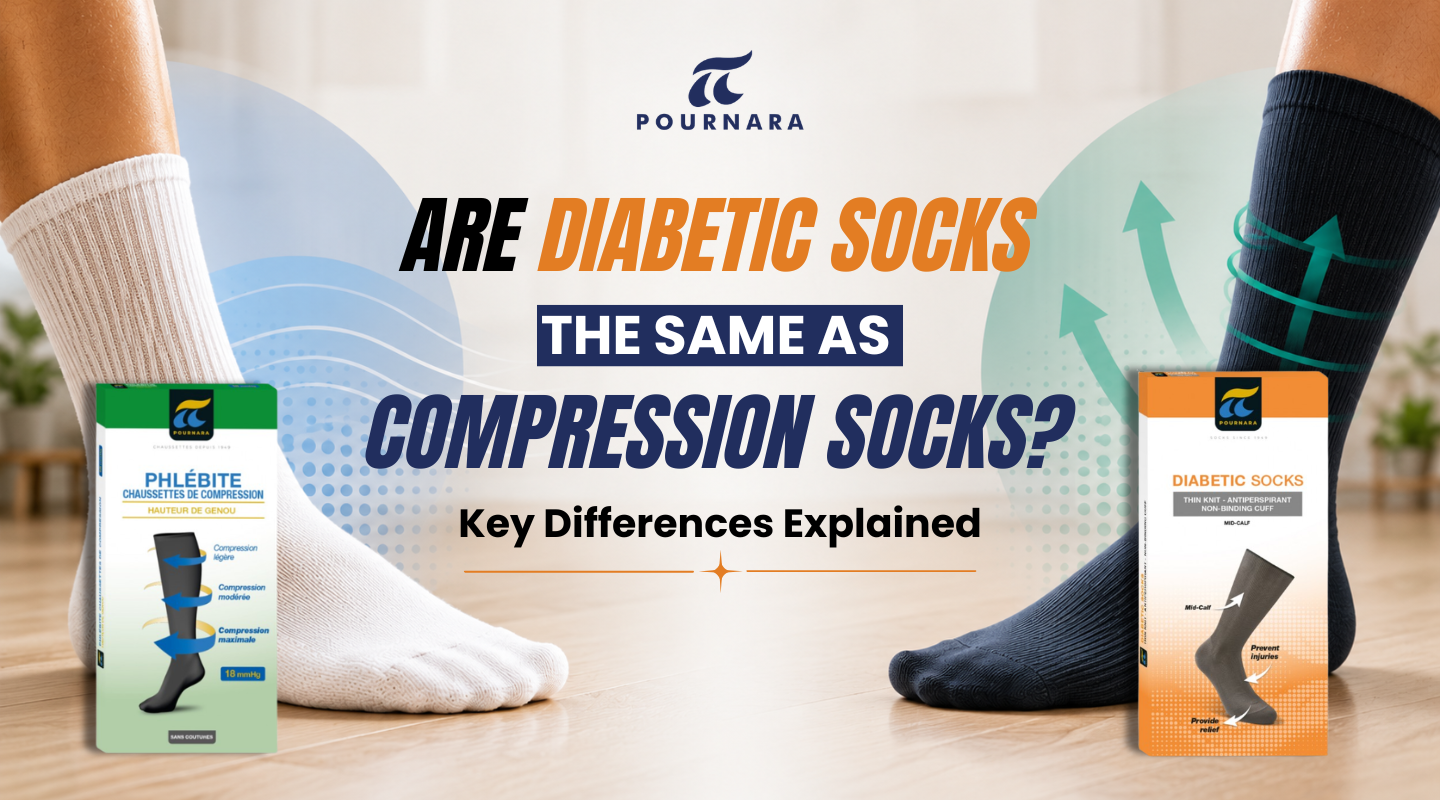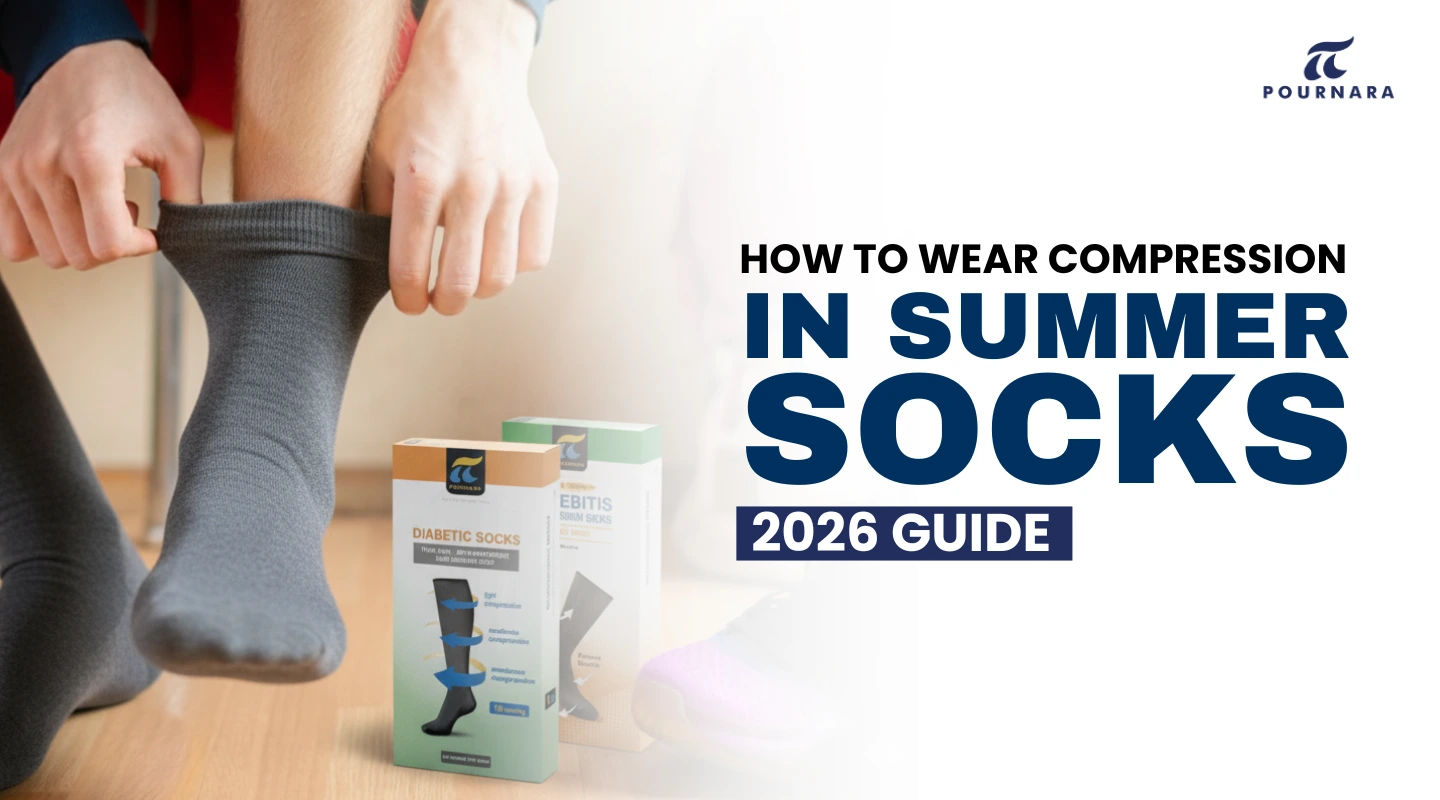
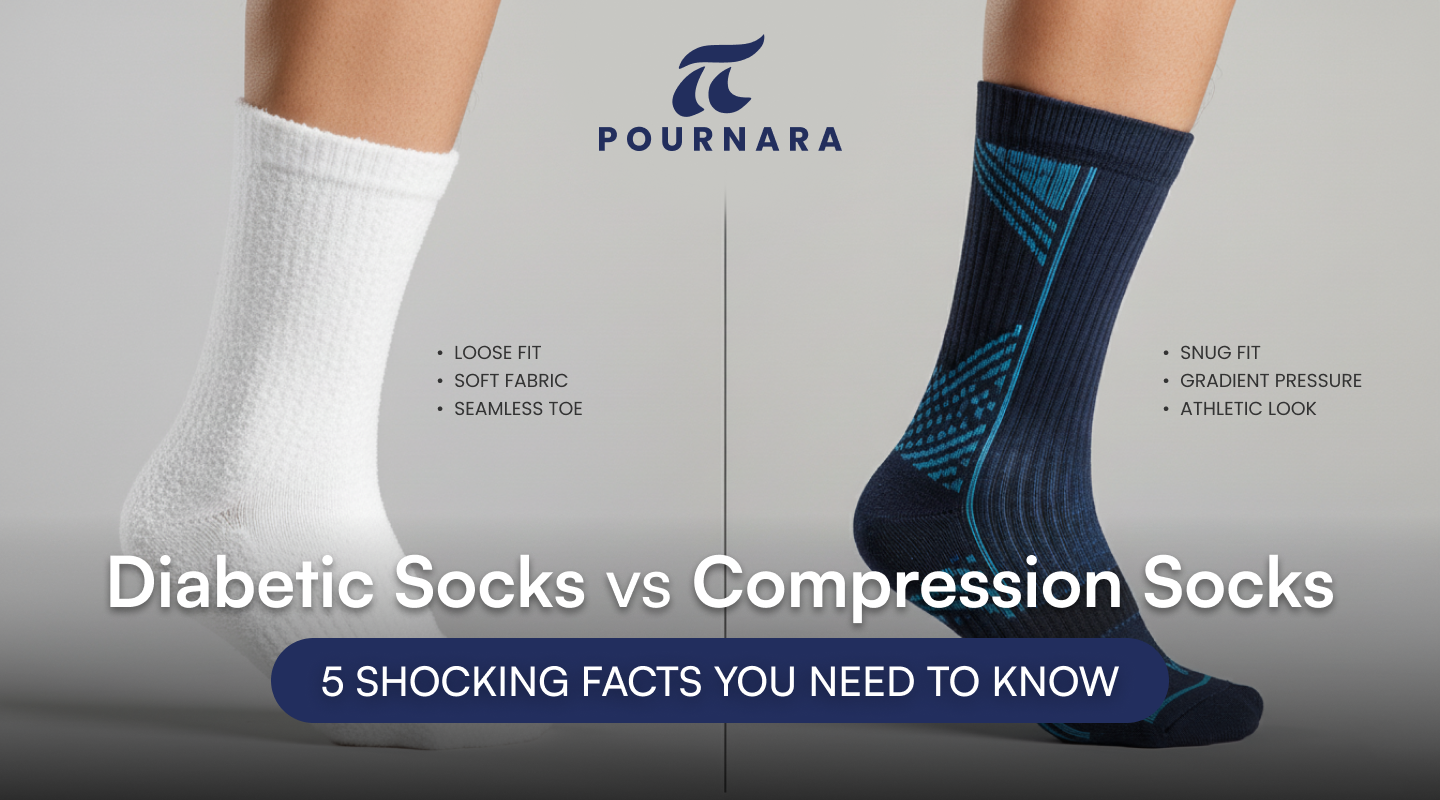
Diabetic socks protect feet through loose, non-binding design. Compression socks apply graduated pressure to boost blood flow. These socks serve opposite purposes one prevents injury, the other manages circulation.
The confusion costs lives. Studies show 42% of diabetic foot complications stem from inappropriate sock choices.
Diabetic socks use non-binding tops and seamless construction. Zero pressure means unrestricted blood flow. The loose fit accommodates swelling without constricting sensitive feet.
Key protective features include moisture-wicking bamboo or merino wool fibers, antimicrobial treatment with silver or copper threading, and strategic padding at heel and toe areas.
Compression socks apply 20-30 mmHg pressure at the ankle, decreasing to 8-15 mmHg at the calf. This graduated pressure forces blood upward through narrower vessels.
The tight elastic construction creates a pressure differential. Blood flows from high-pressure ankle zones to low-pressure areas near the heart.
The shocking truth: Using compression when you need diabetic protection can reduce already-poor circulation by 20-35%.
Peripheral arterial disease (PAD) affects 1 in 3 diabetics over age 50. Adding external pressure to restricted arteries cuts oxygen delivery to foot tissues.
Warning signs of compression damage:
Diabetics need ankle-brachial index (ABI) testing before wearing compression socks. ABI below 0.9 indicates PAD compression becomes contraindicated.
Only 8-15 mmHg mild compression proves safe for diabetics without arterial disease. Even then, medical supervision remains mandatory.
Research shows 68% of diabetics attempting compression without physician approval experience circulation complications within 3 months.
Prominent seams create friction points causing 73% of diabetic foot blisters. Each seam ridge generates 7,000 friction events during normal daily walking.
Seamless construction methods:
The bamboo and merino wool fibers in premium diabetic socks wick moisture 400% faster than cotton. Wet skin breaks down 5x faster moisture management prevents infection.
Compression requires spandex or elastane providing 300% stretch recovery. The graduated knitting uses different tension levels every inch up the calf.
Standard materials can’t achieve medical-grade compression. Specialized machinery creates precise 20-30 mmHg pressure gradients that therapeutic circulation demands.
Diabetic compression socks combine protective seamless design with 8-15 mmHg mild pressure. These hybrid products include moisture-wicking fabric, antimicrobial treatment, and non-binding tops alongside gentle compression.
Medical applications:
Step 1: Get ABI testing. Never assume compression safety.
Step 2: Choose maximum 8-15 mmHg pressure. Higher levels risk ischemia.
Step 3: Inspect feet twice daily for pressure marks or wounds.
Step 4: Remove immediately if discomfort occurs.
A 2023 Podiatry Journal study found 67% of diabetics using properly fitted 8-15 mmHg hybrid socks experienced swelling reduction without circulation complications.
| Your Condition | Correct Sock Type | Compression Level |
| Diabetic neuropathy | Diabetic socks | None (0 mmHg) |
| Peripheral arterial disease | Diabetic socks | None |
| Varicose veins (no diabetes) | Compression socks | 20-30 mmHg |
| Diabetes + mild edema | Diabetic compression hybrid | 8-15 mmHg only |
| Long-distance travel | Compression socks | 15-20 mmHg |
| Active foot ulcers | Diabetic socks | Never compression |
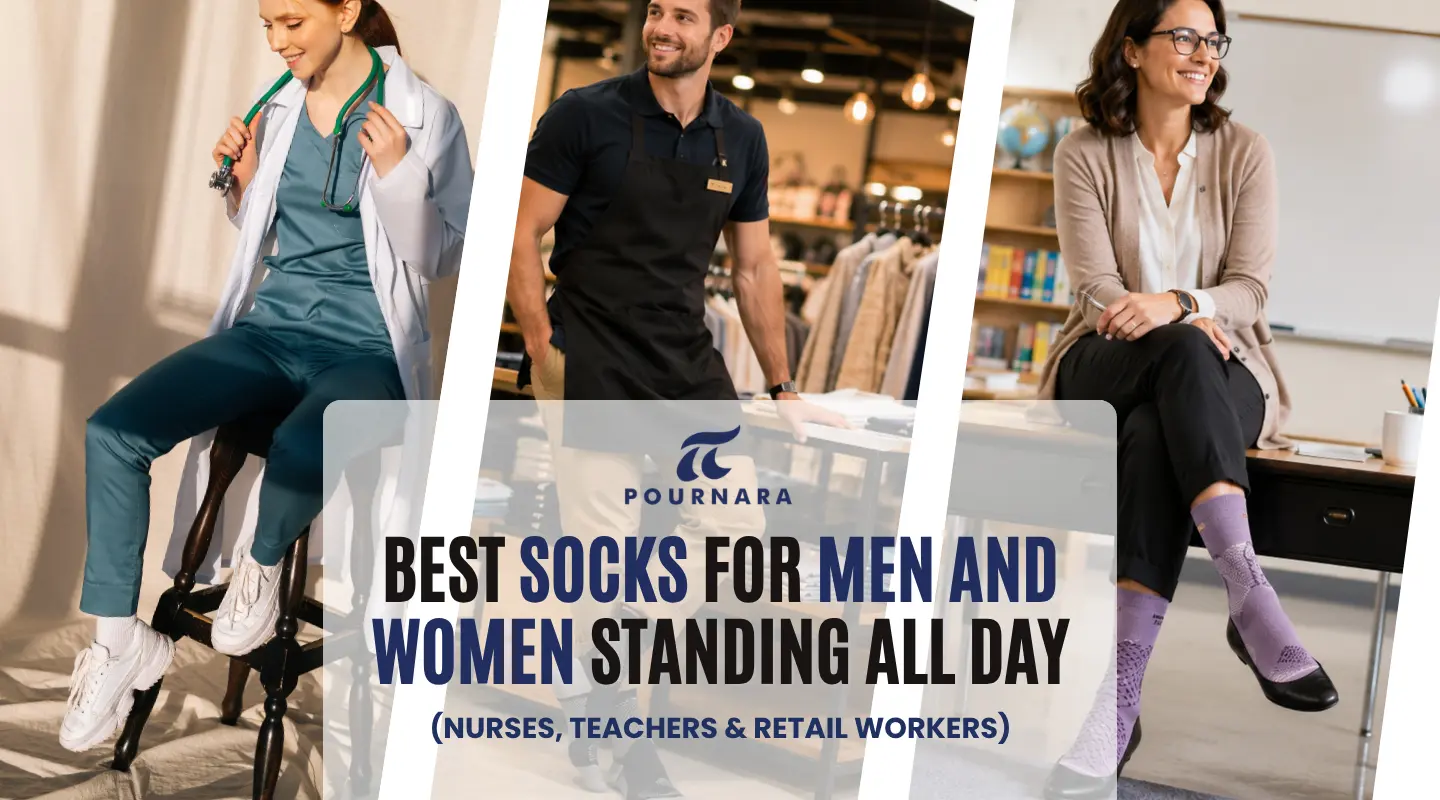
Standing professions: Nurses, teachers, and retail workers benefit from 15-20 mmHg compression. This prevents end-of-shift leg swelling by 65%.
Desk jobs: Sedentary workers need 8-15 mmHg to maintain circulation during 8-hour sitting periods.
Active labor: Construction and warehouse workers with diabetes require extra padding in diabetic socks. This reduces injury risk by 54%.
Consult your podiatrist if:
At Pournara, we craft socks with 220-needle density using premium natural fibers. Our bamboo sock collection provides superior moisture-wicking while maintaining the softness diabetic feet require.
The seamless construction eliminates friction points. Natural antimicrobial properties in bamboo and merino wool prevent bacterial growth without chemical treatments.
Why natural fibers matter for diabetic feet:
Our non-binding tops use gentle elastic that stays up without constriction. The strategic cushioning protects sensitive heel and toe areas during every step.
For those requiring mild compression under medical supervision, proper graduated support combines with protective diabetic features. Always consult your healthcare provider before selecting compression options.
Understanding diabetic socks versus compression socks prevents costly mistakes. Wrong sock selection contributes to 42% of diabetic foot complications costing $15,000-50,000 per ulcer episode.
Take action today:
The right sock choice today prevents amputation tomorrow. Diabetic foot complications remain 85% preventable through proper footwear and sock selection.Explore Pournara’s premium sock collection crafted with 75+ years of Greek textile expertise. Our 220-needle construction and natural materials deliver the protection diabetic feet deserve.
Pournara
We firmly believe that the internet should be available and accessible to anyone, and are committed to providing a website that is accessible to the widest possible audience, regardless of circumstance and ability.
To fulfill this, we aim to adhere as strictly as possible to the World Wide Web Consortium’s (W3C) Web Content Accessibility Guidelines 2.1 (WCAG 2.1) at the AA level. These guidelines explain how to make web content accessible to people with a wide array of disabilities. Complying with those guidelines helps us ensure that the website is accessible to all people: blind people, people with motor impairments, visual impairment, cognitive disabilities, and more.
This website utilizes various technologies that are meant to make it as accessible as possible at all times. We utilize an accessibility interface that allows persons with specific disabilities to adjust the website’s UI (user interface) and design it to their personal needs.
Additionally, the website utilizes an AI-based application that runs in the background and optimizes its accessibility level constantly. This application remediates the website’s HTML, adapts Its functionality and behavior for screen-readers used by the blind users, and for keyboard functions used by individuals with motor impairments.
If you’ve found a malfunction or have ideas for improvement, we’ll be happy to hear from you. You can reach out to the website’s operators by using the following email
Our website implements the ARIA attributes (Accessible Rich Internet Applications) technique, alongside various different behavioral changes, to ensure blind users visiting with screen-readers are able to read, comprehend, and enjoy the website’s functions. As soon as a user with a screen-reader enters your site, they immediately receive a prompt to enter the Screen-Reader Profile so they can browse and operate your site effectively. Here’s how our website covers some of the most important screen-reader requirements, alongside console screenshots of code examples:
Screen-reader optimization: we run a background process that learns the website’s components from top to bottom, to ensure ongoing compliance even when updating the website. In this process, we provide screen-readers with meaningful data using the ARIA set of attributes. For example, we provide accurate form labels; descriptions for actionable icons (social media icons, search icons, cart icons, etc.); validation guidance for form inputs; element roles such as buttons, menus, modal dialogues (popups), and others. Additionally, the background process scans all the website’s images and provides an accurate and meaningful image-object-recognition-based description as an ALT (alternate text) tag for images that are not described. It will also extract texts that are embedded within the image, using an OCR (optical character recognition) technology. To turn on screen-reader adjustments at any time, users need only to press the Alt+1 keyboard combination. Screen-reader users also get automatic announcements to turn the Screen-reader mode on as soon as they enter the website.
These adjustments are compatible with all popular screen readers, including JAWS and NVDA.
Keyboard navigation optimization: The background process also adjusts the website’s HTML, and adds various behaviors using JavaScript code to make the website operable by the keyboard. This includes the ability to navigate the website using the Tab and Shift+Tab keys, operate dropdowns with the arrow keys, close them with Esc, trigger buttons and links using the Enter key, navigate between radio and checkbox elements using the arrow keys, and fill them in with the Spacebar or Enter key.Additionally, keyboard users will find quick-navigation and content-skip menus, available at any time by clicking Alt+1, or as the first elements of the site while navigating with the keyboard. The background process also handles triggered popups by moving the keyboard focus towards them as soon as they appear, and not allow the focus drift outside it.
Users can also use shortcuts such as “M” (menus), “H” (headings), “F” (forms), “B” (buttons), and “G” (graphics) to jump to specific elements.
We aim to support the widest array of browsers and assistive technologies as possible, so our users can choose the best fitting tools for them, with as few limitations as possible. Therefore, we have worked very hard to be able to support all major systems that comprise over 95% of the user market share including Google Chrome, Mozilla Firefox, Apple Safari, Opera and Microsoft Edge, JAWS and NVDA (screen readers).
Despite our very best efforts to allow anybody to adjust the website to their needs. There may still be pages or sections that are not fully accessible, are in the process of becoming accessible, or are lacking an adequate technological solution to make them accessible. Still, we are continually improving our accessibility, adding, updating and improving its options and features, and developing and adopting new technologies. All this is meant to reach the optimal level of accessibility, following technological advancements. For any assistance, please reach out to