
Cold feet make people try everything in winter, from thick wool socks to heated insoles. Compression socks for winter come up often, usually with a promise that they will warm your feet by improving circulation. The truth is more modest. This guide explains what compression socks do and do not do in cold weather, which fabric and level to choose, how to layer them without squeezing your feet, and who should check with a doctor first.
Quick answer: Yes, compression socks can be good for winter, but they are not automatically warm. Their gentle pressure supports circulation, while warmth comes from the fabric, so choose a wool or thermal blend in 15-20 mmHg and layer carefully. Skip them, or ask your doctor first, if you have diabetes, severe peripheral artery disease or numb feet, and never wear a pair that feels painfully tight.
Key takeaways
This article is for general education and is not medical advice. Talk with your doctor if you have a health condition or ongoing leg symptoms.
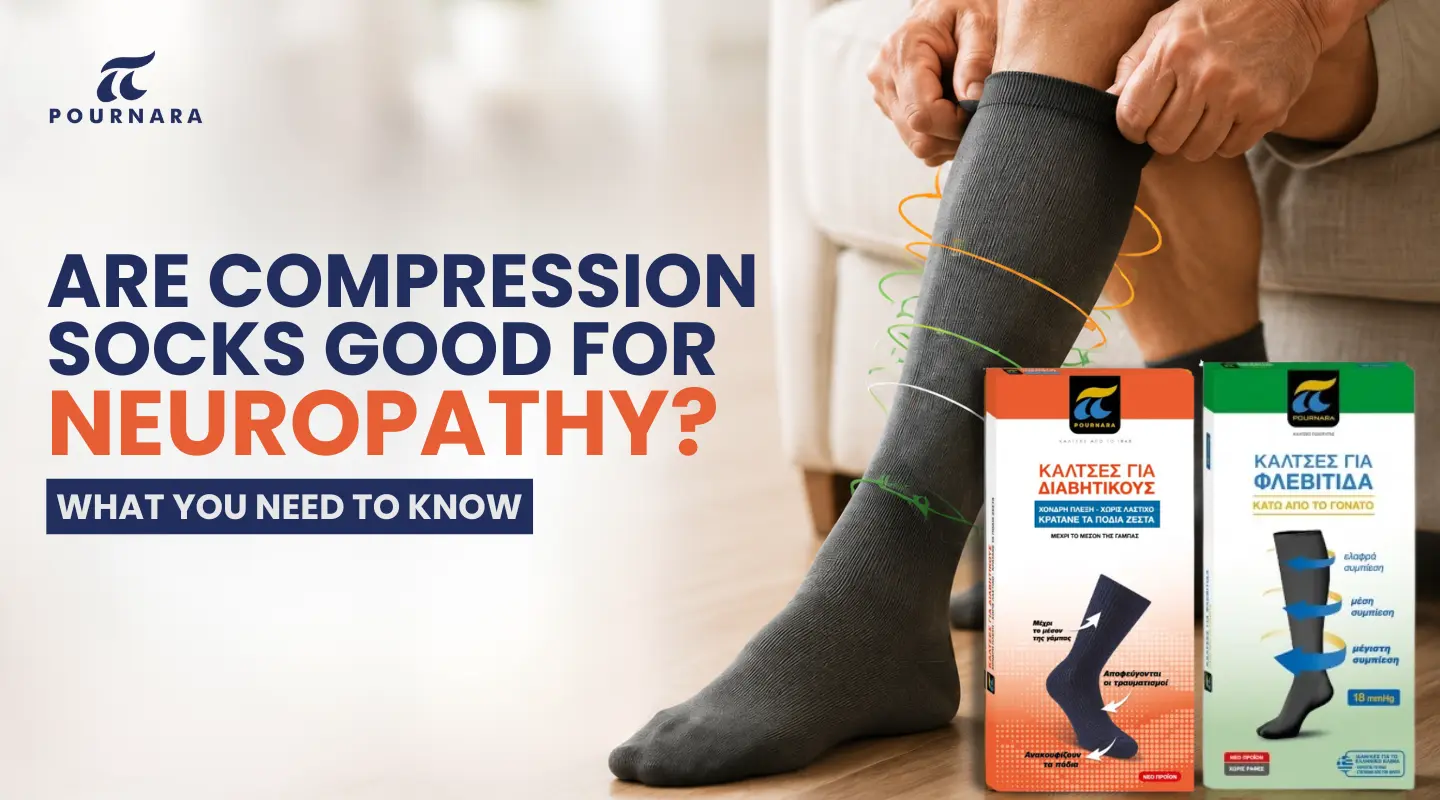
Compression socks help some people in some winter situations, but warmth is not their main job. They are made to apply graduated pressure that supports blood flow back toward the heart, as Sigvaris explains. Insulation is a different job. It depends on fabric, thickness and how well the sock keeps your feet dry.
Not by pressure alone. A thin, firm compression sock in a smooth synthetic fabric may feel no warmer than a regular dress sock, and sometimes cooler. A compression sock knitted from wool or a thermal blend can feel very warm, because the fabric is doing the work. Many online guides say compression socks warm your feet by improving circulation. Most of those pages are written by sock sellers, and we could not find strong clinical studies showing that compression socks make healthy feet warmer. Treat that claim with caution.
Graduated compression helps move blood from the lower leg back up toward the heart, which is why it is used for swelling and for long periods of sitting or standing. That is not the same as sending more warm blood into your toes. If your feet are cold because the room is cold, your boots are tight or your socks are damp, the fix is warmth, room and dryness. If your feet are cold all the time, or turn white, blue or numb, see a doctor. The cause may be a circulation or nerve condition that socks cannot solve.
Winter changes what many people do all day: more sitting indoors, more driving and more holiday travel. Compression socks tend to help when those habits leave your legs heavy or swollen.
Desk jobs, remote work and long commutes can leave your legs heavy by evening. A light to moderate level, usually 15-20 mmHg, can ease that feeling. Pair it with short walking breaks, since no sock replaces movement.
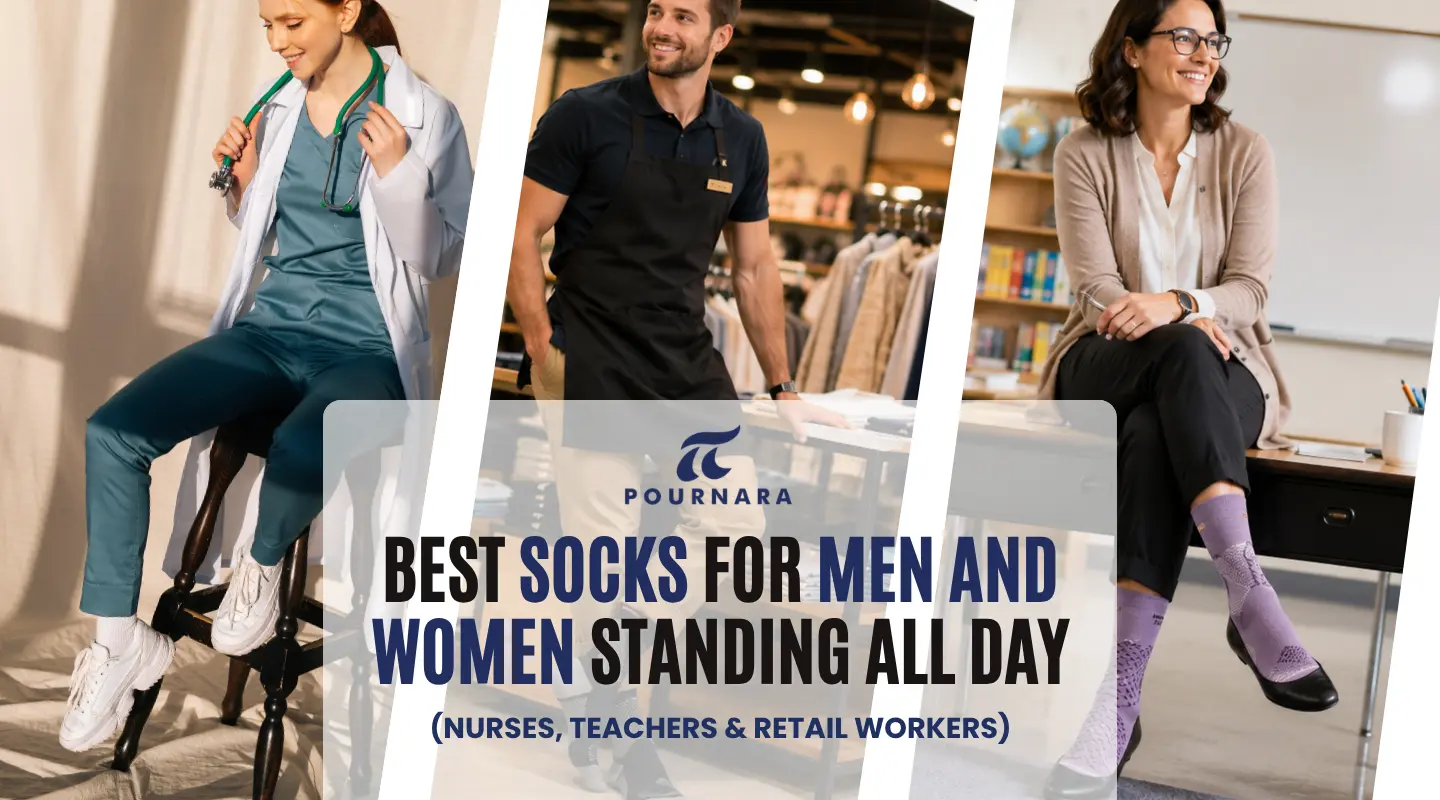
Winter retail, hospitality and healthcare shifts are hard on the legs. Compression helps with tired, achy legs, and cushioning matters just as much. Our guide to the best socks for standing all day covers both.
Long drives and flights around Thanksgiving and December are a common reason to try compression. A Cochrane review of flights lasting at least four hours found high-certainty evidence that compression stockings reduce symptomless DVT. If you have had a blood clot, talk with your doctor before you travel.
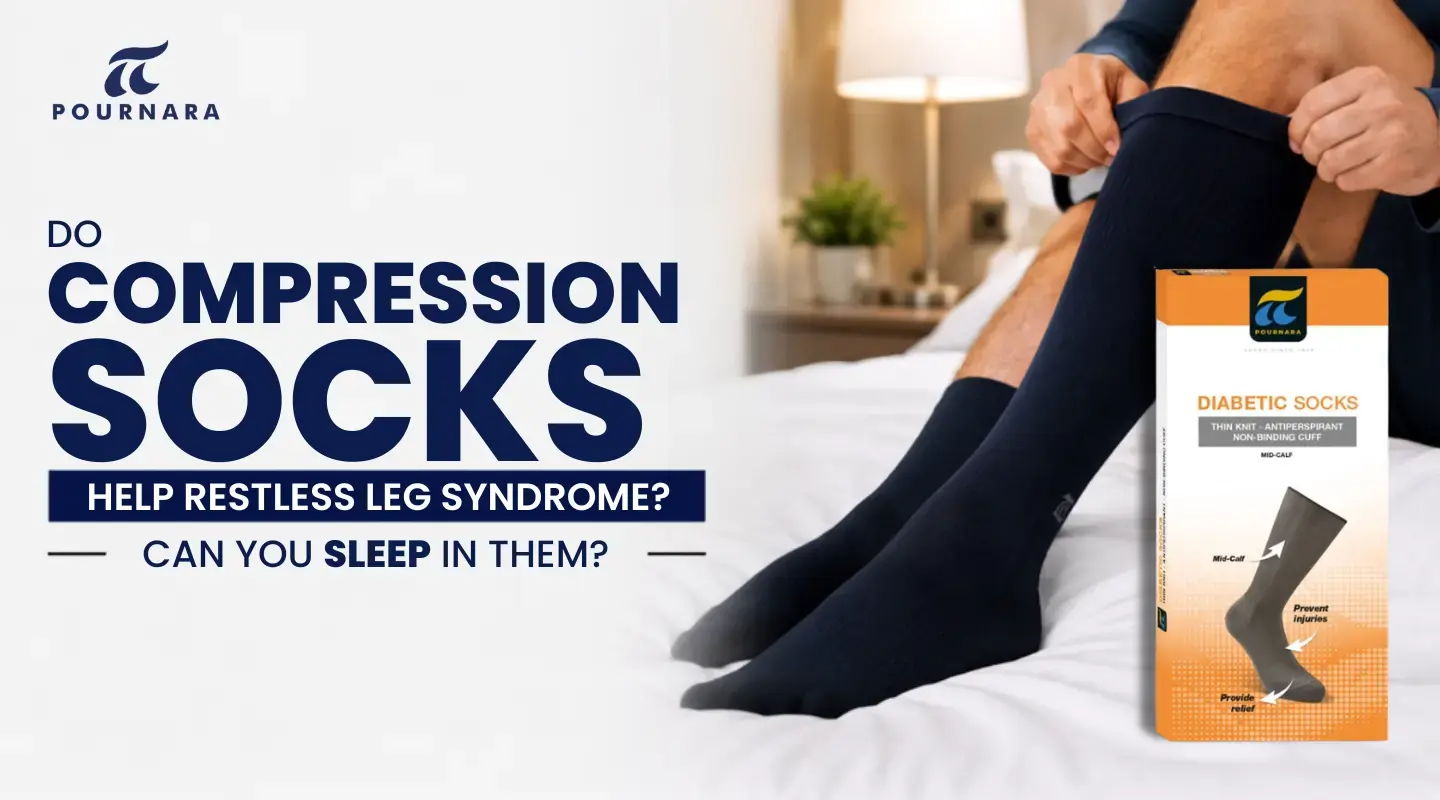
Mild ankle puffiness at the end of the day often responds to 15-20 mmHg. Cold feet that never warm up are different. They deserve a medical check before you spend money on socks. If you also have restless legs at night, our article on compression socks and restless leg syndrome explains what to expect.
Raynaud’s causes fingers and toes to feel numb and cold in response to cold or stress. Mayo Clinic says that dressing in layers and wearing heavy socks usually helps mild symptoms, and that medicines are available for more serious ones. Harvard Health adds that keeping your whole body warm matters, not just your feet. Compression socks are not a substitute for that advice or for medical care, so ask your doctor before trying them.
For most healthy adults, 15-20 mmHg is a sensible winter level. Choose 8-15 mmHg if you only want light support, and talk with your doctor before choosing 20 mmHg or higher. The UW Health handout lists the common ratings and notes that compression stockings should feel tight but should not hurt.
A higher number is not a warmer sock. Firmer levels are also harder to pull on over dry winter skin and fit poorly under thick layers. For a full breakdown of each level, read our guide on what mmHg compression socks you need.
Fabric decides warmth, and moisture decides whether you keep it. Here is how the common options compare.
| Fabric | Warmth | Moisture | Notes |
|---|---|---|---|
| Wool or merino blends | High | Handles moisture well and tends to stay warm when damp | The best all-round winter choice, can feel thick |
| Thermal or brushed blends | High | Varies by blend | Look for a soft inner pile |
| Bamboo blends | Medium | Soft and absorbent | Good for mild winters and indoor wear |
| Cotton | Low to medium | Holds moisture and feels cold when wet | Fine indoors, weak on wet or snowy days |
| Nylon, polyester and other synthetics | Low to medium | Dry quickly | Useful in blends, thin on their own |
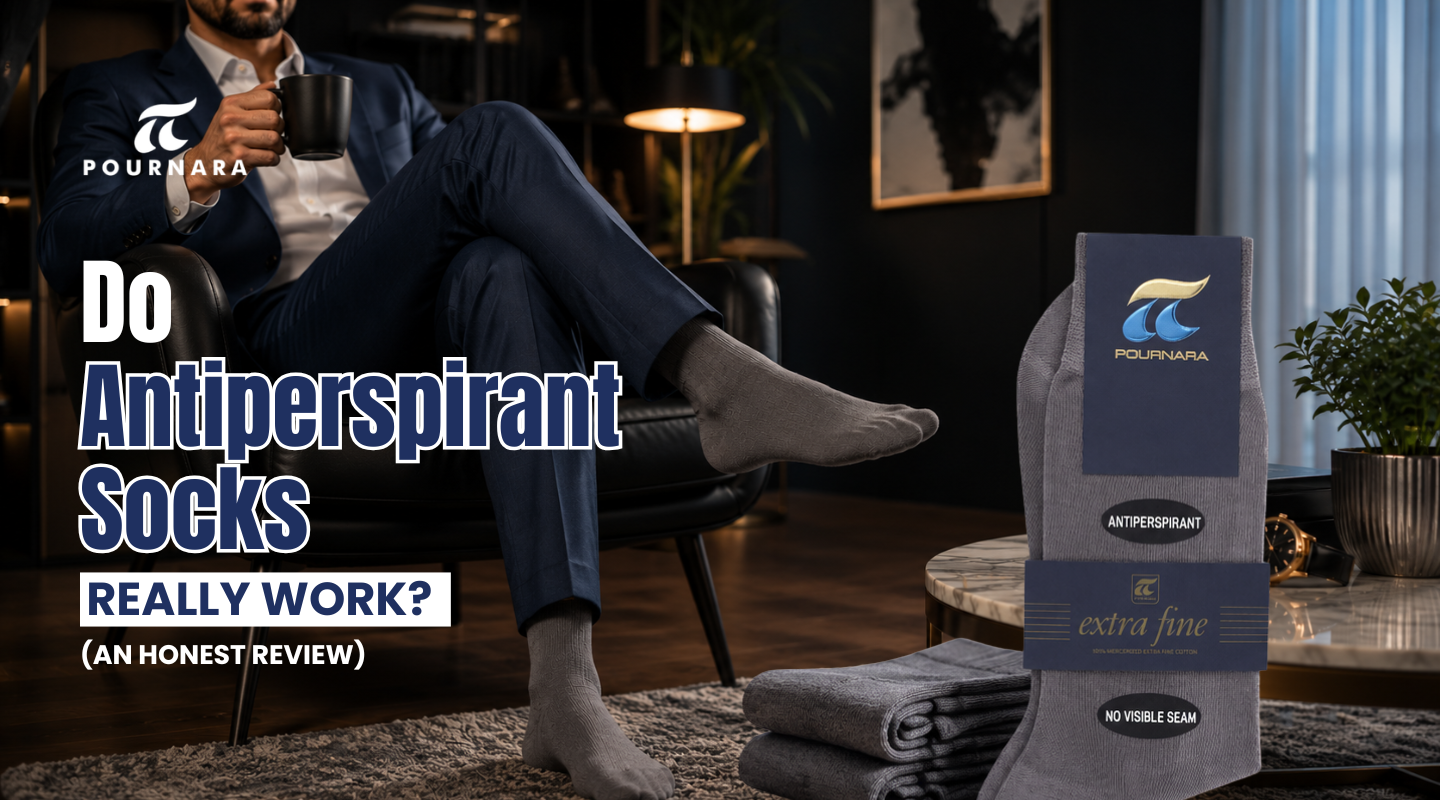
Damp feet lose heat fast. The CDC lists people with poor circulation among those at higher risk of frostbite, and guidance summarized from OSHA says to keep your feet dry in the cold and change socks as often as you can. If sweaty feet are your main problem, read our honest review of antiperspirant socks.
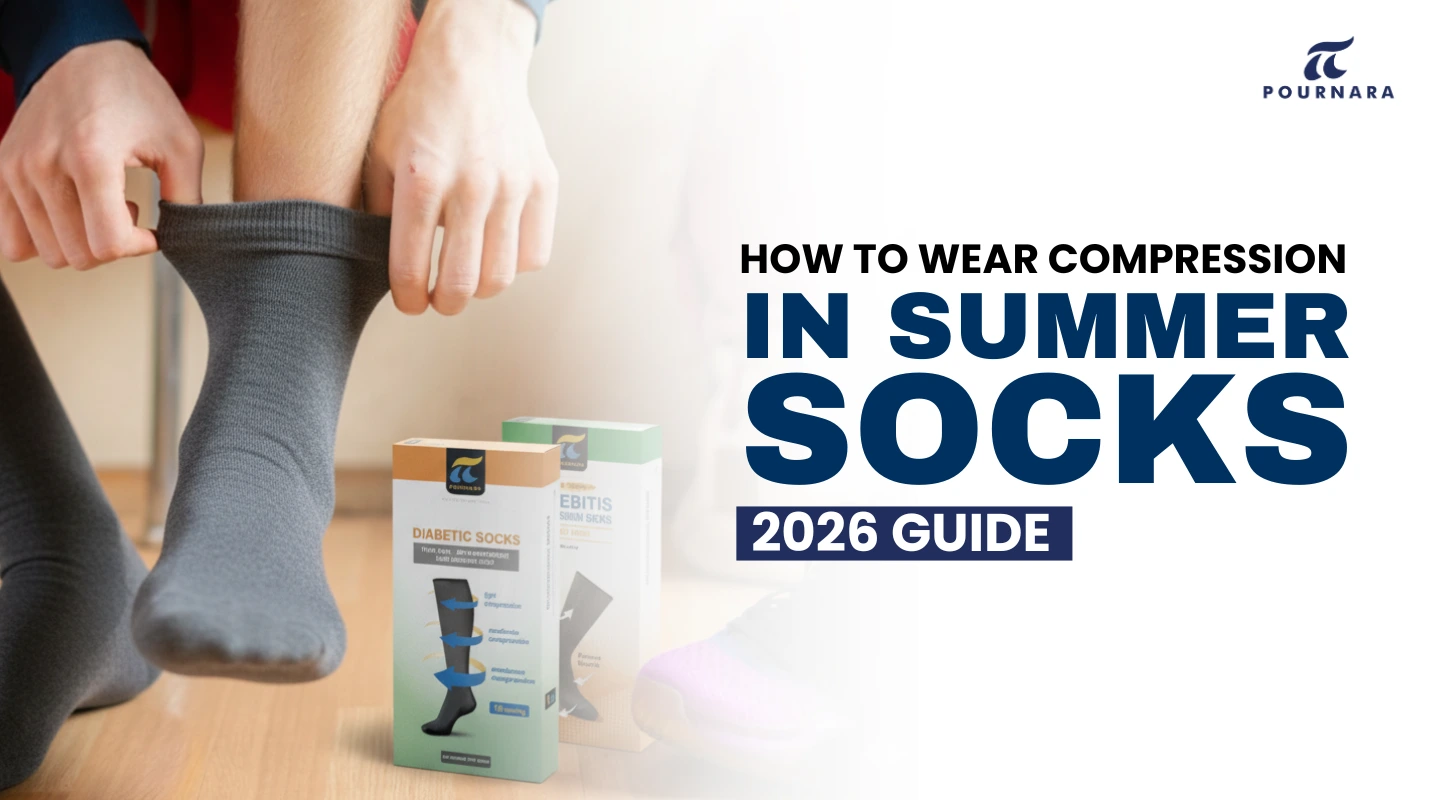
Wear compression socks next to your skin as the base layer, because that is where they work best. If your boots have room, add a thin, loose wool sock over them for extra warmth. Do not stack thick socks on top if the combination squeezes your foot, and never wear two pairs of compression socks at once.
Tight boots press out the air that keeps feet warm and can make cold feet worse. Try boots on with your full sock layers and check that you can wiggle your toes. You may need to go up half a size for winter.
Carry a spare pair, change out of damp socks as soon as you can, and let boots dry fully between wears. If your feet sweat in winter boots, choose moisture-friendly fabrics like wool or bamboo blends over cotton.
Want a winter-ready everyday sock? Browse our men’s collection and check the fabric details on each product page.
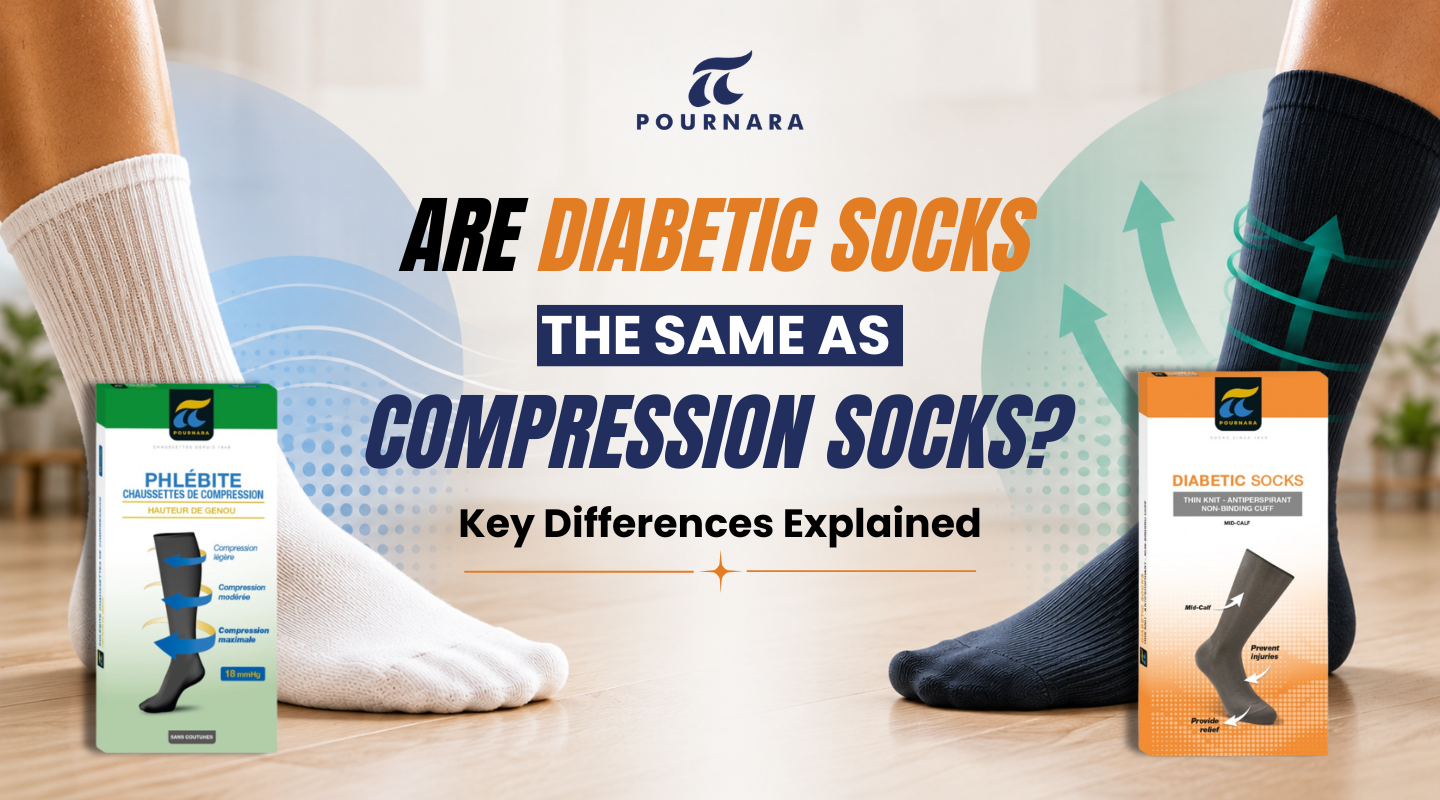
If you have diabetes, our article on whether diabetic socks are the same as compression socks explains the differences.
Cold exposure adds its own risk. The CDC describes frostbite as freezing injury, with warning signs that include white or grayish-yellow skin, skin that feels firm or waxy, and numbness. Because the frozen area is numb, people often do not notice it. Seek medical care if you suspect frostbite, and do not rub the area.
Once you know what you need, fabric and fit decide how the sock feels in December. Pournara socks are made in Greece with a focus on softness, fit and durability, and our medical socks for men collection is built for supportive comfort through a long day. Check each product’s details for the fabric and compression level, and use our support page if you want help matching a sock to your routine. If the fit is not right, our returns and exchanges page has the details.
If you do not need compression, our 100% mercerized cotton socks for men and soft bamboo socks work well for everyday indoor comfort, and our women’s collection has options too.
We sell socks, so we have a stake in this topic. The guidance above applies to any brand, and your doctor’s advice always comes first.
Not by themselves. Compression supports blood flow but does not insulate. A compression sock made from wool or a thermal blend can feel warm because of the fabric, so check the material as well as the mmHg rating.
Wear compression socks next to your skin and add a thin, loose wool sock over them only if your boots have room. Avoid stacking thick socks that squeeze your foot, and never layer two compression socks..
For most healthy adults, 15-20 mmHg is a sensible winter level, and 8-15 mmHg works for light support. A firmer level is not warmer. Talk with your doctor before choosing 20 mmHg or higher.
They can help with heavy, swollen legs, but they do not treat the cause of cold feet. Feet that stay cold, or turn white, blue or numb, need a doctor’s evaluation for circulation or nerve problems.
Layering and warm socks are the standard advice for mild Raynaud’s, according to Mayo Clinic. Compression socks are not a proven treatment, so ask your doctor before trying them.
Yes, if the boots have room. Try boots on with your full sock layers, keep your feet dry and carry a spare pair so you can change out of damp socks.
They can be if the fabric is thick. NOAA’s outlook leans warm across much of the northern US this winter, so a lighter wool or bamboo blend in 8-15 or 15-20 mmHg is often enough.
Compression socks can be a good winter choice when the fabric is warm, the level is right and the fit leaves room in your boots. Pressure supports your legs, while wool, dry feet and sensible layers keep you warm. Start with 15-20 mmHg if you are healthy, skip high levels without medical advice and never ignore numbness or color changes in your toes.
Questions about fit or fabric? Our support team is happy to help, and you can find more guides on our blog. This article is general education, not medical advice.
Pournara
We firmly believe that the internet should be available and accessible to anyone, and are committed to providing a website that is accessible to the widest possible audience, regardless of circumstance and ability.
To fulfill this, we aim to adhere as strictly as possible to the World Wide Web Consortium’s (W3C) Web Content Accessibility Guidelines 2.1 (WCAG 2.1) at the AA level. These guidelines explain how to make web content accessible to people with a wide array of disabilities. Complying with those guidelines helps us ensure that the website is accessible to all people: blind people, people with motor impairments, visual impairment, cognitive disabilities, and more.
This website utilizes various technologies that are meant to make it as accessible as possible at all times. We utilize an accessibility interface that allows persons with specific disabilities to adjust the website’s UI (user interface) and design it to their personal needs.
Additionally, the website utilizes an AI-based application that runs in the background and optimizes its accessibility level constantly. This application remediates the website’s HTML, adapts Its functionality and behavior for screen-readers used by the blind users, and for keyboard functions used by individuals with motor impairments.
If you’ve found a malfunction or have ideas for improvement, we’ll be happy to hear from you. You can reach out to the website’s operators by using the following email
Our website implements the ARIA attributes (Accessible Rich Internet Applications) technique, alongside various different behavioral changes, to ensure blind users visiting with screen-readers are able to read, comprehend, and enjoy the website’s functions. As soon as a user with a screen-reader enters your site, they immediately receive a prompt to enter the Screen-Reader Profile so they can browse and operate your site effectively. Here’s how our website covers some of the most important screen-reader requirements, alongside console screenshots of code examples:
Screen-reader optimization: we run a background process that learns the website’s components from top to bottom, to ensure ongoing compliance even when updating the website. In this process, we provide screen-readers with meaningful data using the ARIA set of attributes. For example, we provide accurate form labels; descriptions for actionable icons (social media icons, search icons, cart icons, etc.); validation guidance for form inputs; element roles such as buttons, menus, modal dialogues (popups), and others. Additionally, the background process scans all the website’s images and provides an accurate and meaningful image-object-recognition-based description as an ALT (alternate text) tag for images that are not described. It will also extract texts that are embedded within the image, using an OCR (optical character recognition) technology. To turn on screen-reader adjustments at any time, users need only to press the Alt+1 keyboard combination. Screen-reader users also get automatic announcements to turn the Screen-reader mode on as soon as they enter the website.
These adjustments are compatible with all popular screen readers, including JAWS and NVDA.
Keyboard navigation optimization: The background process also adjusts the website’s HTML, and adds various behaviors using JavaScript code to make the website operable by the keyboard. This includes the ability to navigate the website using the Tab and Shift+Tab keys, operate dropdowns with the arrow keys, close them with Esc, trigger buttons and links using the Enter key, navigate between radio and checkbox elements using the arrow keys, and fill them in with the Spacebar or Enter key.Additionally, keyboard users will find quick-navigation and content-skip menus, available at any time by clicking Alt+1, or as the first elements of the site while navigating with the keyboard. The background process also handles triggered popups by moving the keyboard focus towards them as soon as they appear, and not allow the focus drift outside it.
Users can also use shortcuts such as “M” (menus), “H” (headings), “F” (forms), “B” (buttons), and “G” (graphics) to jump to specific elements.
We aim to support the widest array of browsers and assistive technologies as possible, so our users can choose the best fitting tools for them, with as few limitations as possible. Therefore, we have worked very hard to be able to support all major systems that comprise over 95% of the user market share including Google Chrome, Mozilla Firefox, Apple Safari, Opera and Microsoft Edge, JAWS and NVDA (screen readers).
Despite our very best efforts to allow anybody to adjust the website to their needs. There may still be pages or sections that are not fully accessible, are in the process of becoming accessible, or are lacking an adequate technological solution to make them accessible. Still, we are continually improving our accessibility, adding, updating and improving its options and features, and developing and adopting new technologies. All this is meant to reach the optimal level of accessibility, following technological advancements. For any assistance, please reach out to