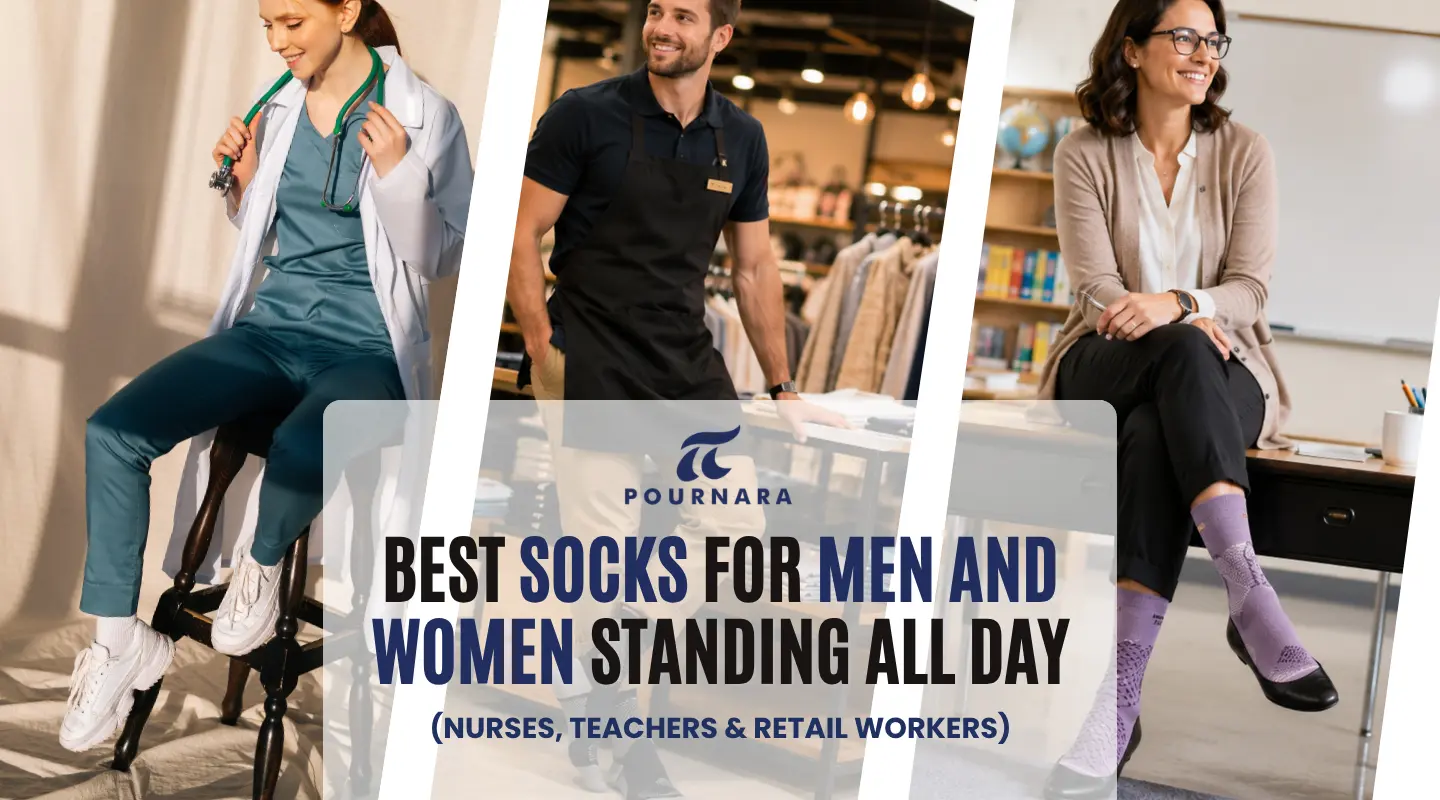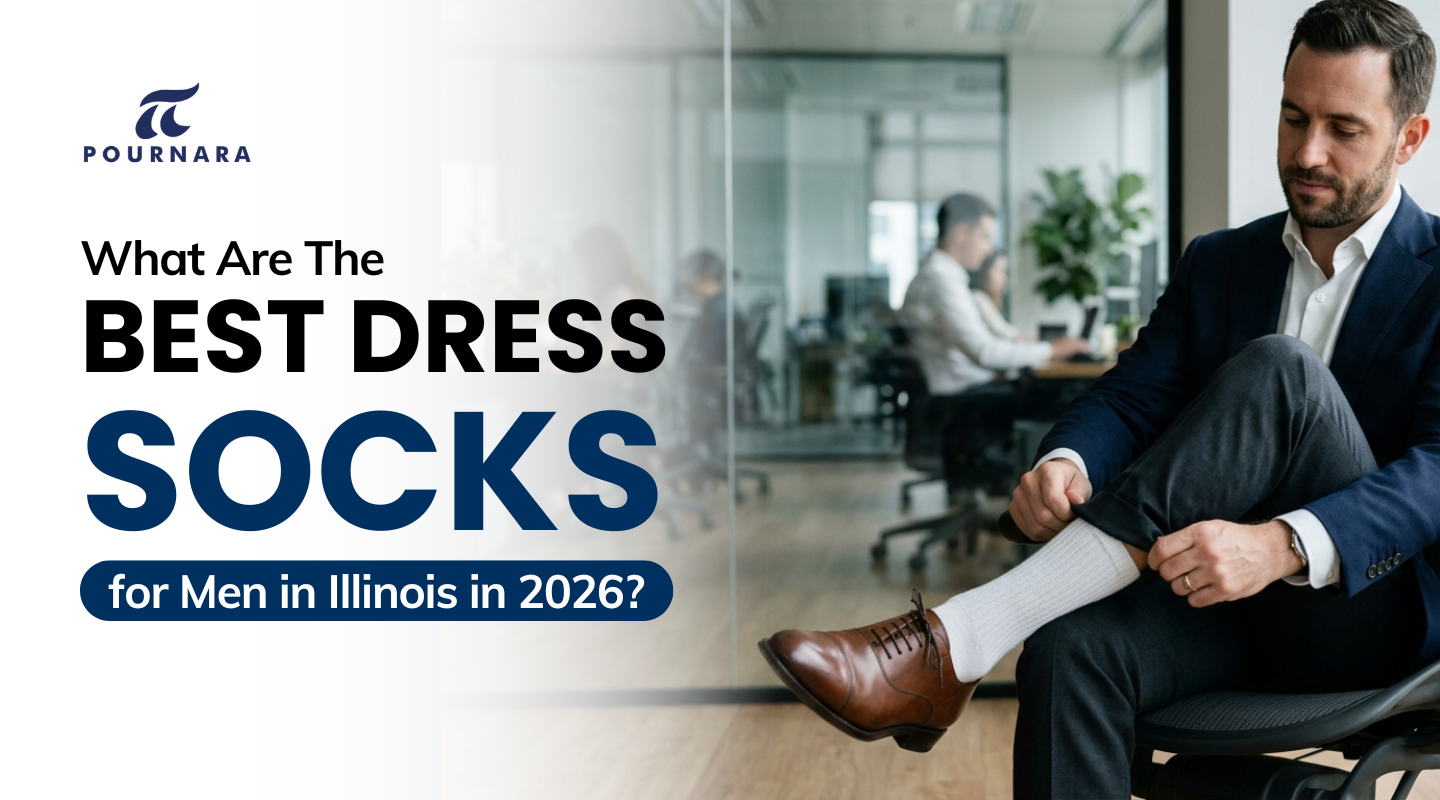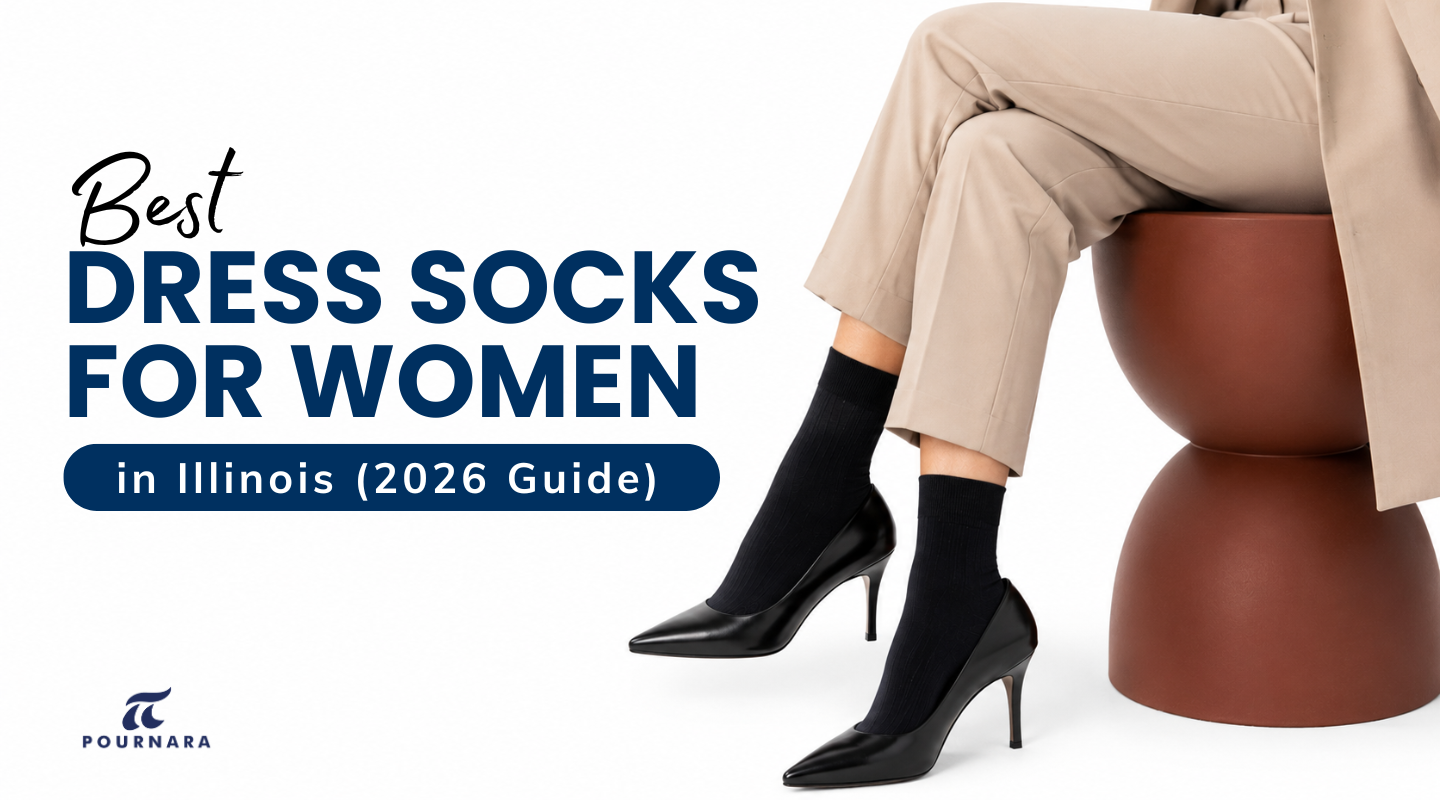

Office work socks require 4 specific performance features distinct from athletic designs. Professional appearance maintains workplace standards through 8-plus hour shifts. Compression support addresses circulation issues from prolonged sitting or standing. Temperature regulation manages climate-controlled office environments. Odor resistance prevents embarrassment in close professional settings.
Studies show 62% of office workers experience foot fatigue by mid-afternoon. The right socks reduce this discomfort by 40% through targeted support and moisture management.
Merino wool naturally regulates temperature across 40-degree fluctuations common in office buildings. The 17 to 19 micron fiber diameter creates softness suitable for all-day wear in dress shoes. Natural antimicrobial properties eliminate 66% of foot odor compared to synthetic materials.
The fiber absorbs 30% of its weight in moisture vapor while feeling dry to touch. This prevents the clammy sensation that develops during afternoon meetings. Premium wool socks combine these benefits with refined styling appropriate for professional environments.
Bamboo contains bamboo kun, a natural antimicrobial eliminating 70% of odor-causing bacteria. The hollow fiber structure provides superior breathability, crucial for feet confined in closed-toe shoes for 8 to 10 hours daily.
The moisture-wicking capability proves essential for office workers. Feet produce approximately 250 milliliters of perspiration daily. Bamboo socks absorb this moisture at 3 times their weight, preventing the bacterial growth that causes odor.
What Role Does Compression Play?
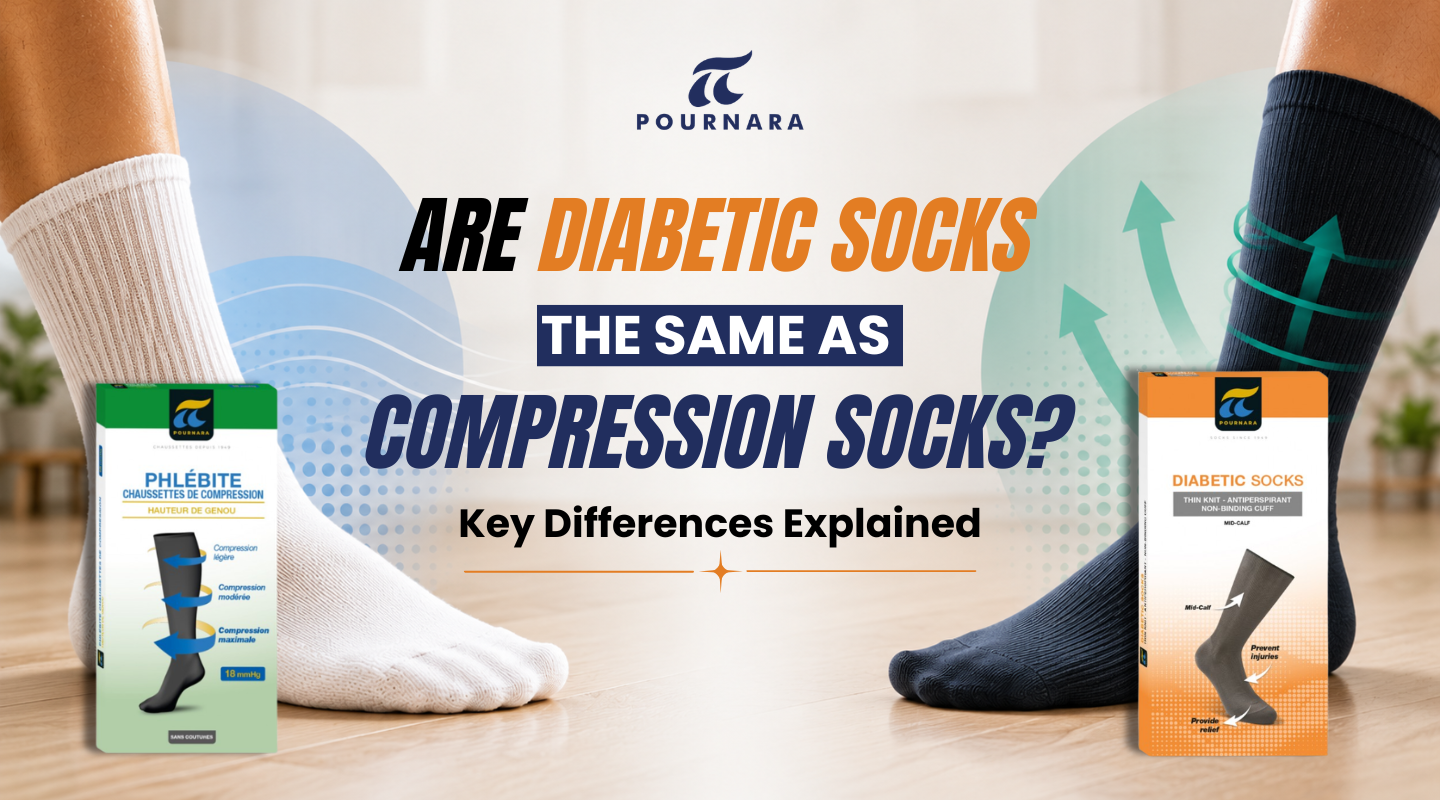
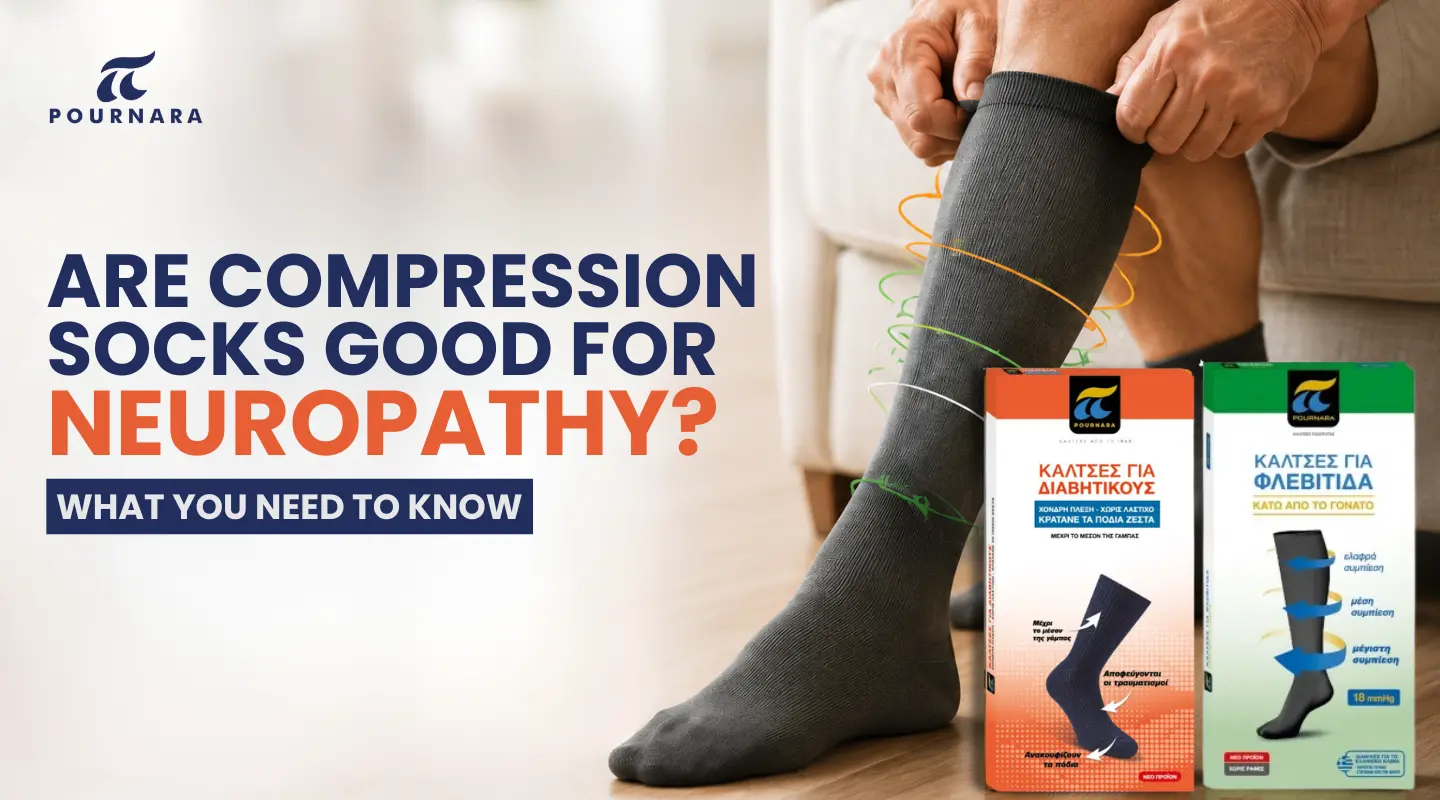
Moderate compression (15 to 20 mmHg) improves circulation during extended sitting periods. Office workers who sit 6-plus hours daily experience 30% reduction in leg swelling with compression socks. The graduated pressure promotes blood flow, preventing the heaviness and fatigue that develops by afternoon.
Compression proves equally valuable for workers who alternate between sitting and standing. The consistent support reduces strain on calf muscles and prevents the pooling that causes varicose veins over time.
| Feature | Office Benefit | Performance Impact |
| Arch support | Reduces standing fatigue | 35% less foot strain |
| Seamless toe | Prevents dress shoe friction | 80% fewer blisters |
| Moisture-wicking | Keeps feet dry in closed shoes | Eliminates odor issues |
| Non-binding top | Maintains circulation | 25% better blood flow |
Seamless toe construction eliminates the friction points that become painful in fitted dress shoes. Traditional seams create pressure against toes during 8,000 to 10,000 steps taken during average office days.
Arch support distributes weight evenly across the foot structure. This reduces the focused pressure that causes pain during extended standing at desks or during presentations.
Crew length socks work well for pants and most office footwear. They provide adequate coverage without excess fabric bunching at ankles. The length accommodates both dress shoes and ankle boots common in professional settings.
Knee-high styles benefit workers spending 80% of time seated. The extended compression prevents leg fatigue and swelling during long periods at desks. Women particularly prefer knee-highs with skirts and dresses for complete coverage.
Quarter socks suit casual office environments with relaxed dress codes. However, they offer minimal coverage and lack the compression benefits valuable for circulation.
Lightweight to medium-weight socks fit properly in dress shoes without creating tightness. Heavy cushioning that works in athletic shoes causes discomfort in fitted professional footwear.
Look for targeted cushioning at heel and ball of foot rather than full coverage. This provides impact absorption without bulk. The strategic padding prevents hot spots during extended wear.
Dress shoes typically fit more snugly than casual footwear. Socks thicker than 2 millimeters create pressure points and reduce circulation in already confined spaces.
Natural fiber socks eliminate odor better than synthetics. Merino wool and bamboo contain biological antimicrobial agents that actively fight bacteria. These natural defenses don’t wash away like chemical treatments.
Change socks midday during 10-plus hour workdays. Fresh socks at lunch reduce bacterial buildup by 60% compared to single-pair wear. Keep an extra pair in desk drawers for afternoon changes.
Rotate between 7 to 10 pairs weekly. This allows each pair to fully dry and air between wears. Damp socks create breeding grounds for odor-causing bacteria.
Compression socks benefit 73% of desk workers experiencing afternoon leg fatigue. The moderate pressure improves circulation, reducing swelling and heaviness. Workers report 45% less leg discomfort during extended sitting.
Start with 15 to 20 mmHg compression for daily office wear. Higher compression levels (20 to 30 mmHg) suit workers with existing circulation issues or those standing 6-plus hours daily.
Compression socks prevent long-term circulation problems. Studies show regular use reduces varicose vein development by 35% in sedentary workers.
Check out this article, Compression Socks for Shin Splints: Do They Really Help?
What Should You Avoid in Office Socks?
Materials to Skip:
Construction Issues:
Avoid novelty socks in conservative office environments. While personal expression matters, professional settings require discretion in sock choices. Save bold patterns for casual Fridays or creative workplaces.
Pournara has manufactured premium socks in Athens since 1949, understanding the demands of professional environments. Our collections address specific office needs through thoughtful material selection and construction.
For office professionals, we offer:
Each pair reflects 75 years of expertise in creating socks that maintain comfort and appearance through demanding workdays. The 220-needle construction ensures durability while providing the refined look professional settings require.
Pournara
We firmly believe that the internet should be available and accessible to anyone, and are committed to providing a website that is accessible to the widest possible audience, regardless of circumstance and ability.
To fulfill this, we aim to adhere as strictly as possible to the World Wide Web Consortium’s (W3C) Web Content Accessibility Guidelines 2.1 (WCAG 2.1) at the AA level. These guidelines explain how to make web content accessible to people with a wide array of disabilities. Complying with those guidelines helps us ensure that the website is accessible to all people: blind people, people with motor impairments, visual impairment, cognitive disabilities, and more.
This website utilizes various technologies that are meant to make it as accessible as possible at all times. We utilize an accessibility interface that allows persons with specific disabilities to adjust the website’s UI (user interface) and design it to their personal needs.
Additionally, the website utilizes an AI-based application that runs in the background and optimizes its accessibility level constantly. This application remediates the website’s HTML, adapts Its functionality and behavior for screen-readers used by the blind users, and for keyboard functions used by individuals with motor impairments.
If you’ve found a malfunction or have ideas for improvement, we’ll be happy to hear from you. You can reach out to the website’s operators by using the following email
Our website implements the ARIA attributes (Accessible Rich Internet Applications) technique, alongside various different behavioral changes, to ensure blind users visiting with screen-readers are able to read, comprehend, and enjoy the website’s functions. As soon as a user with a screen-reader enters your site, they immediately receive a prompt to enter the Screen-Reader Profile so they can browse and operate your site effectively. Here’s how our website covers some of the most important screen-reader requirements, alongside console screenshots of code examples:
Screen-reader optimization: we run a background process that learns the website’s components from top to bottom, to ensure ongoing compliance even when updating the website. In this process, we provide screen-readers with meaningful data using the ARIA set of attributes. For example, we provide accurate form labels; descriptions for actionable icons (social media icons, search icons, cart icons, etc.); validation guidance for form inputs; element roles such as buttons, menus, modal dialogues (popups), and others. Additionally, the background process scans all the website’s images and provides an accurate and meaningful image-object-recognition-based description as an ALT (alternate text) tag for images that are not described. It will also extract texts that are embedded within the image, using an OCR (optical character recognition) technology. To turn on screen-reader adjustments at any time, users need only to press the Alt+1 keyboard combination. Screen-reader users also get automatic announcements to turn the Screen-reader mode on as soon as they enter the website.
These adjustments are compatible with all popular screen readers, including JAWS and NVDA.
Keyboard navigation optimization: The background process also adjusts the website’s HTML, and adds various behaviors using JavaScript code to make the website operable by the keyboard. This includes the ability to navigate the website using the Tab and Shift+Tab keys, operate dropdowns with the arrow keys, close them with Esc, trigger buttons and links using the Enter key, navigate between radio and checkbox elements using the arrow keys, and fill them in with the Spacebar or Enter key.Additionally, keyboard users will find quick-navigation and content-skip menus, available at any time by clicking Alt+1, or as the first elements of the site while navigating with the keyboard. The background process also handles triggered popups by moving the keyboard focus towards them as soon as they appear, and not allow the focus drift outside it.
Users can also use shortcuts such as “M” (menus), “H” (headings), “F” (forms), “B” (buttons), and “G” (graphics) to jump to specific elements.
We aim to support the widest array of browsers and assistive technologies as possible, so our users can choose the best fitting tools for them, with as few limitations as possible. Therefore, we have worked very hard to be able to support all major systems that comprise over 95% of the user market share including Google Chrome, Mozilla Firefox, Apple Safari, Opera and Microsoft Edge, JAWS and NVDA (screen readers).
Despite our very best efforts to allow anybody to adjust the website to their needs. There may still be pages or sections that are not fully accessible, are in the process of becoming accessible, or are lacking an adequate technological solution to make them accessible. Still, we are continually improving our accessibility, adding, updating and improving its options and features, and developing and adopting new technologies. All this is meant to reach the optimal level of accessibility, following technological advancements. For any assistance, please reach out to